

Coffee is one of the most consumed beverages on the planet, yet its flavor profile is notoriously volatile. The difference between a cup that tastes vibrant and complex and one that tastes flat or stale is not just subjective preference. It is a matter of chemistry. According to data from the Specialty Coffee Association, the window for peak flavor after roasting is remarkably short. This guide explains the scientific mechanisms behind coffee degradation and why sourcing freshly roasted beans is the single most effective way to elevate your daily brew.
The Degassing Process: Why CO2 Matters
When coffee beans are roasted, a chemical reaction called the Maillard reaction occurs. This process creates hundreds of aromatic compounds and carbon dioxide (CO2). Carbon dioxide is trapped within the cellular structure of the bean during roasting. Immediately after roasting, the beans are saturated with this gas.
This phenomenon is known as degassing. Freshly roasted coffee must rest to allow excess CO2 to escape. If you brew coffee immediately after roasting, the trapped gas interferes with water extraction. The result is a cup that is often sour, unevenly extracted, and overly bitter. Research into roasting chemistry confirms that the rate of CO2 release is critical for determining the optimal brewing window.
For most light and medium roasts, a rest period of 3 to 7 days is ideal. Darker roasts degas faster due to their more porous structure. By waiting for the right moment, you ensure that the water can properly extract the soluble solids that create sweetness and body. This is why freshly roasted blends often require a brief pause before they reach their peak potential.
Oxidation: The Enemy of Aroma
Oxidation is the primary driver of coffee staling. When coffee beans are exposed to oxygen, the oils and aromatic compounds on the surface begin to break down. This process is similar to how an apple turns brown after being cut. The chemical changes are irreversible. Once the delicate lipids oxidize, the nuanced flavors of fruit, chocolate, or floral notes are lost forever.
The rate of oxidation depends on several factors, including the roast level and the surface area of the beans. Whole beans oxidize much slower than ground coffee because there is less surface area exposed to the air. Industry standards for freshness suggest that ground coffee begins to lose significant flavor within 15 minutes of grinding.
This is why buying whole beans is superior to buying pre-ground coffee. It allows you to control the moment of oxidation. By grinding only what you need, you preserve the integrity of the bean until the very last second before brewing. This practice is central to the philosophy of single origin coffee enthusiasts who seek to taste the specific terroir of the harvest.
Volatile Compounds and Flavor Loss
Coffee contains over 800 volatile aromatic compounds. These are the molecules that travel from your cup to your olfactory receptors, creating the perception of flavor. Without smell, taste is limited to sweet, sour, salty, bitter, and umami. The complexity of coffee comes from its aroma.
These volatile compounds are highly unstable. They evaporate quickly when exposed to heat, light, and air. Scientific studies on aroma volatility demonstrate that the concentration of these compounds drops precipitously over time. A coffee that was vibrant two weeks ago may now taste flat because the top notes have evaporated.
Freshly roasted coffee retains the highest concentration of these volatiles. As the beans age, the delicate top notes disappear first, leaving behind only the heavier, darker compounds. This is why old coffee often tastes only of "roast" or "wood" rather than the specific fruit or spice notes intended by the roaster. To experience the full spectrum of flavor, you must consume the coffee while these compounds are still active.
Common Storage Mistakes That Ruin Freshness
Even if you buy the freshest beans, improper storage can ruin them within days. The three enemies of coffee freshness are light, heat, and moisture. Storing coffee in a clear glass jar on a sunny counter accelerates oxidation and degrades the oils rapidly.
Another common mistake is storing coffee in the refrigerator or freezer. While freezing can preserve coffee for long-term storage, it is only effective if done correctly. Repeatedly taking the container out and letting it condense moisture introduces water to the beans. This moisture causes the cellular structure to break down and promotes mold growth. Best practices for home storage recommend an opaque, airtight container at room temperature for daily use.
For long-term preservation, freeze coffee in airtight, vacuum-sealed portions. Never thaw and refreeze. This method locks in the volatile compounds and prevents oxidation. However, for the best daily experience, buying smaller quantities more frequently is superior to bulk buying. This ensures that you are always drinking coffee at its peak. Explore our sample packs to try different roasts without committing to large bags.
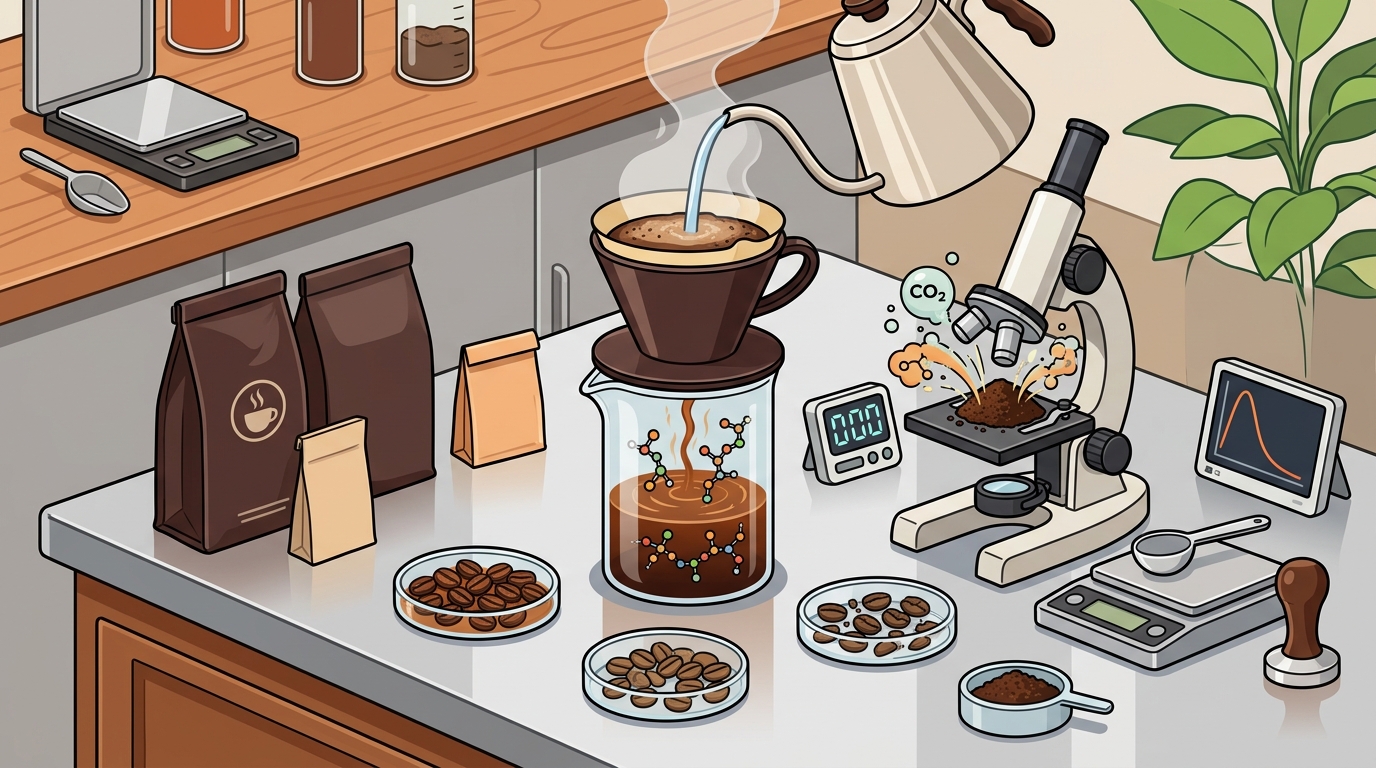
Fresh vs. Stale Coffee: A Comparison
Understanding the difference between fresh and stale coffee helps you make better purchasing decisions. The table below outlines the key sensory differences you can expect.
| Characteristic | Freshly Roasted Coffee (1-4 Weeks) | Stale Coffee (3+ Months) |
|---|---|---|
| Aroma | Complex, vibrant, and distinct (fruity, floral, nutty) | Flat, cardboard-like, or faint |
| Acidity | Bright, sparkling, and pleasant | Muted, sour, or absent |
| Body | Full, syrupy, and rich | Thin, watery, or hollow |
| Aftertaste | Long-lasting and sweet | Bitter, dry, or chalky |
| Crema (Espresso) | Thick, persistent, and tiger-striped | Thin, quick-disappearing, or non-existent |
As shown, the sensory experience degrades significantly over time. The loss of acidity and body is particularly noticeable in light roasts, which rely on their natural fruit sugars for sweetness. Dark roasts may mask some staleness with their bold roast flavors, but they still lose their complexity. For the most accurate assessment, always compare a fresh cup to an old one side by side.
Key Takeaways
- CO2 Degassing: Freshly roasted coffee releases carbon dioxide, which must dissipate for proper extraction. Brewing too soon results in sour, uneven cups.
- Oxidation Speed: Ground coffee loses significant flavor within 15 minutes of grinding. Whole beans preserve freshness much longer.
- Volatile Compounds: Over 800 aromatic compounds create coffee flavor. These evaporate quickly, making time since roasting the critical factor in taste.
- Storage Best Practices: Keep coffee in an opaque, airtight container at room temperature. Avoid light, heat, and moisture.
- Roast Date Matters: Always check the roast date. Coffee is best consumed within 3 to 4 weeks of roasting for peak flavor.
- Whole Bean Advantage: Grinding only what you need minimizes oxidation and preserves the integrity of the bean.
- Flavor Complexity: Fresh coffee offers distinct notes of fruit, spice, and chocolate that stale coffee cannot replicate.
Frequently Asked Questions
How long does freshly roasted coffee stay fresh?
Coffee is generally considered fresh for 3 to 4 weeks after the roast date. During this window, the volatile compounds are at their peak concentration. After this period, oxidation begins to significantly dull the flavor profile, though the coffee remains safe to drink.
Why does my coffee taste sour if it is fresh?
If your coffee tastes sour and you just roasted it, it may be under-extracted due to excessive CO2. Fresh beans release gas that can block water from contacting the grounds evenly. Allowing the beans to rest for a few days after roasting can resolve this issue.
Can I freeze freshly roasted coffee?
Yes, but only if done correctly. Freeze coffee in airtight, vacuum-sealed portions. Do not thaw and refreeze. Repeated temperature changes cause condensation, which ruins the bean structure. For daily use, store coffee in a cool, dark cupboard instead.
What is the difference between light and dark roast freshness?
Light roasts retain more of their original bean characteristics and volatile compounds. They are more sensitive to staleness because their bright acidity fades quickly. Dark roasts have more surface oils and a more porous structure, which can make them stale faster but also mask some flavor loss with bold roast notes.
Does the grind size affect how fast coffee goes stale?
Yes, significantly. The larger the surface area exposed to air, the faster the oxidation. Ground coffee begins to lose flavor within minutes. Whole beans can stay fresh for weeks. Always grind your coffee immediately before brewing to preserve the maximum amount of aroma.
How do I know if coffee is too old?
Stale coffee lacks aroma. If you open the bag and cannot smell distinct notes of chocolate, fruit, or nuts, the volatile compounds have likely evaporated. The taste will also be flat and hollow, lacking the brightness and complexity of fresh coffee.
Why do some roasters recommend waiting days after roasting?
This is due to the degassing process. Freshly roasted beans are saturated with carbon dioxide. Brewing immediately can lead to uneven extraction and a sour taste. Allowing the beans to rest for 3 to 7 days lets the CO2 escape, resulting in a cleaner, sweeter cup.
Start Drinking Better Coffee Today
The difference between a good cup and a great cup is time. By choosing freshly roasted coffee, you ensure that you are experiencing the full complexity of the bean. Avoid the flat taste of stale, mass-produced coffee. Explore our curated collection of freshly roasted coffees and experience the difference that time makes. Shop our latest roasts and elevate your daily ritual.