
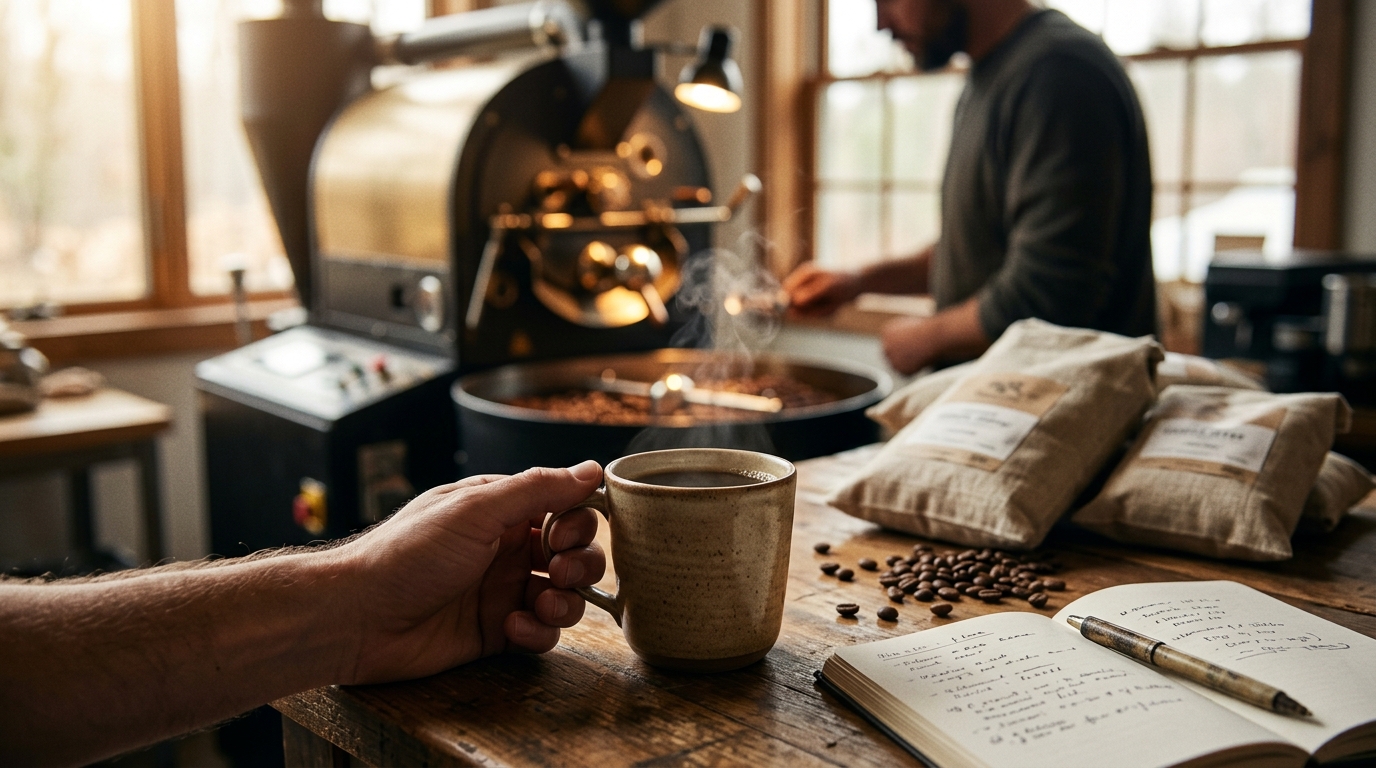
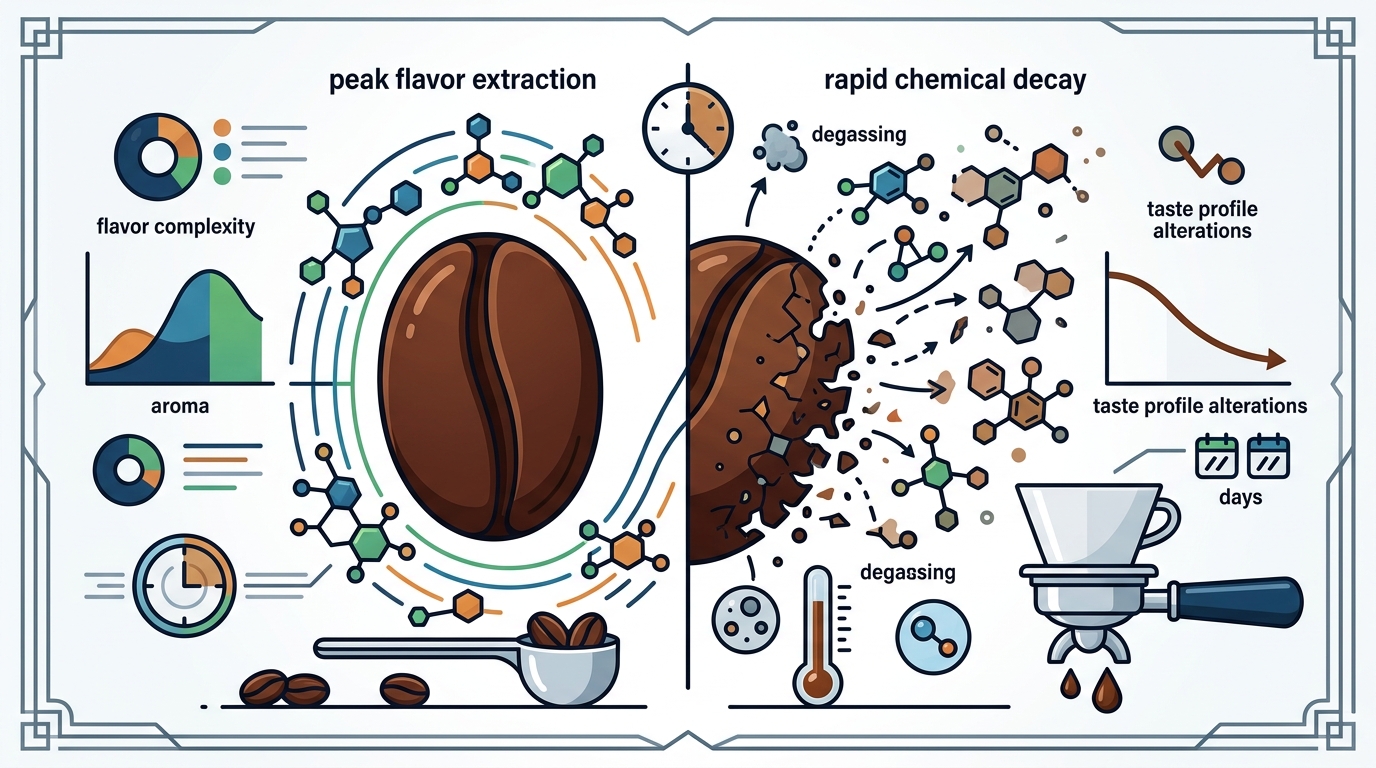
Most coffee drinkers assume that freshness is just a marketing buzzword. The reality is far more scientific. According to data from the Specialty Coffee Association, the window for peak flavor extraction is incredibly narrow. Once a bean is roasted, it begins a rapid chemical decay that alters its taste profile within days. Understanding this timeline is the key to unlocking a superior cup of coffee every single morning. (Products ndash Just Coffee)
The Degassing Process Explained
When coffee beans are roasted, they undergo a dramatic transformation. The heat causes the cellular structure of the bean to expand and break down. This process releases carbon dioxide (CO2) that was trapped inside the bean during its growth. This release is known as degassing.
Carbon dioxide is a natural byproduct of roasting. It acts as a protective shield for the coffee's delicate aromatic compounds. However, this gas must escape for the coffee to be brewed properly. If you brew coffee immediately after roasting, the excess CO2 will interfere with water contact. This leads to uneven extraction and a sour, acidic taste.
Most specialty roasters allow their beans to rest for several days after roasting. This resting period allows the CO2 levels to stabilize. It also allows the internal flavors to settle. This is why the timing of your purchase relative to the roast date is critical. You want to buy coffee that has degassed enough to brew evenly but is still young enough to retain its vibrant character.
For more details on the roasting timeline, you can explore the all coffees collection at Just Coffee. Each batch is roasted with precise timing to ensure optimal degassing before shipping.
Oxidation and the Staling Effect
Once the carbon dioxide has escaped, the coffee bean becomes vulnerable. The exposed surface area of the bean reacts with oxygen in the air. This chemical reaction is called oxidation. Oxidation is the primary cause of coffee staling.
As oxidation occurs, the lipids (fats) in the coffee bean begin to break down. These lipids are responsible for carrying many of the complex flavors and aromas. When they degrade, the coffee loses its brightness and complexity. The flavor profile shifts from fruity and floral to flat and cardboard-like.
Research indicates that coffee begins to lose its peak flavor within 14 days of roasting. After 30 days, the degradation is significant. The coffee is not necessarily "bad" or unsafe to drink. However, it lacks the nuance and intensity that makes specialty coffee worth the investment. This is why buying from a roaster who ships directly to your door is superior to buying pre-packaged coffee from a grocery store shelf.
You can read more about the chemistry of coffee staling in this scientific overview of coffee staling. The data clearly shows that time is the enemy of flavor.
Aroma Volatility and Perception
Taste is only half of the coffee experience. Aroma plays a massive role in how we perceive flavor. The volatile organic compounds (VOCs) in coffee are responsible for its scent. These compounds are highly fragile.
When coffee is fresh, these VOCs are intact. They evaporate quickly when hot water is added. This creates the rich, inviting aroma that fills your kitchen. As the coffee ages, these compounds dissipate into the air. The coffee loses its scent and, consequently, its perceived flavor.
This is why stale coffee often tastes bitter. Without the balancing sweetness and acidity provided by fresh aromatics, the bitter compounds become more prominent. The coffee feels harsh and one-dimensional. Fresh coffee offers a balanced profile where sweetness, acidity, and bitterness coexist harmoniously.
Understanding the link between aroma and taste helps explain why freshly roasted coffee tastes better. It is not just about the bean. It is about the volatile gases that carry the flavor to your nose. For a deeper dive into sensory science, check out this study on coffee aroma perception.
Fresh vs. Old Coffee Comparison
To visualize the difference, consider the following comparison of fresh versus aged coffee. This table highlights the key differences in flavor, aroma, and chemical composition.
| Characteristic | Freshly Roasted (1-14 Days) | Aged (30+ Days) |
|---|---|---|
| Flavor Profile | Bright, complex, fruity, floral | Flat, cardboard-like, woody |
| Aroma Intensity | Strong, inviting, volatile | Faint, muted, absent |
| Acidity | Present, balanced, sparkling | Low, dull, or sharp/bitter |
| Body | Full, syrupy, rich | Thin, watery, hollow |
| Chemical State | High CO2, intact lipids | Low CO2, oxidized lipids |
This comparison underscores why freshness is non-negotiable for quality coffee. The difference is not subtle. It is a complete transformation of the sensory experience. By choosing single origin coffees, you can taste the unique terroir of each region before those flavors fade.
Storage Best Practices
Even the freshest coffee will degrade if stored incorrectly. Proper storage is essential to maintain the quality of your beans. Here are the most effective methods for keeping your coffee fresh.
Airtight containers are essential. Oxygen is the primary enemy of coffee freshness. Use containers with one-way valves to allow CO2 to escape without letting oxygen in. Glass jars with tight seals are a good option for short-term storage.
Avoid storing coffee in the refrigerator or freezer. The moisture in these environments can damage the beans. Freezing can also cause condensation when you take the beans out. This accelerates staling. Instead, store your coffee in a cool, dark pantry. Keep it away from heat sources like stoves or ovens.
Buy only what you will use within two weeks. This ensures that you are always drinking coffee at its peak. If you need to buy in bulk, divide the beans into smaller portions. Keep the majority sealed and stored properly. Use the smaller portion for daily brewing.
For more tips on coffee care, visit our contact page to ask our experts about your specific storage questions.
Key Takeaways
- Freshly roasted coffee retains volatile aromatic compounds that degrade over time.
- Oxidation breaks down lipids, leading to flat and cardboard-like flavors.
- Carbon dioxide must degas for proper extraction, but too much causes sourness.
- Coffee peaks in flavor between 7 and 14 days after roasting.
- Airtight storage in a cool, dark place is critical for longevity.
- Fresh coffee offers a balanced profile of acidity, sweetness, and bitterness.
- Buying from a direct-to-consumer roaster ensures maximum freshness.
Frequently Asked Questions
How long does freshly roasted coffee stay fresh?
Coffee is at its peak flavor between 7 and 14 days after roasting. It remains enjoyable for up to 4 weeks, but the complexity begins to fade after the second week.
Can I freeze freshly roasted coffee?
Freezing is generally not recommended for daily use. The moisture and temperature fluctuations can damage the beans. If you must freeze, do so in an airtight container and avoid thawing and refreezing.
Why does old coffee taste bitter?
As fresh aromatics dissipate, the bitter compounds become more prominent. The lack of balancing sweetness and acidity makes the bitterness stand out more sharply.
What is the best way to store coffee?
Store coffee in an opaque, airtight container in a cool, dark pantry. Avoid clear jars, heat sources, and moisture.
Does the roast date matter?
Yes, the roast date is the most important indicator of freshness. Always check the date before purchasing to ensure you are getting the best quality.
How do I know if my coffee is stale?
Stale coffee lacks aroma and has a flat taste. It may also have a dusty or cardboard-like smell. If the bag does not puff up when opened, it has likely degassed completely and is old.
Why is freshly roasted coffee more expensive?
Freshly roasted coffee requires more frequent shipping and careful handling. The cost reflects the labor of roasting small batches and the logistics of delivering it quickly to preserve quality.
Shop Freshly Roasted Coffee
Experience the difference that freshness makes. At Just Coffee, we roast our beans in small batches and ship them directly to your door. This ensures that you receive coffee at the peak of its flavor profile. Explore our blends and flavored options to find your perfect cup. Start your journey to better coffee today.