
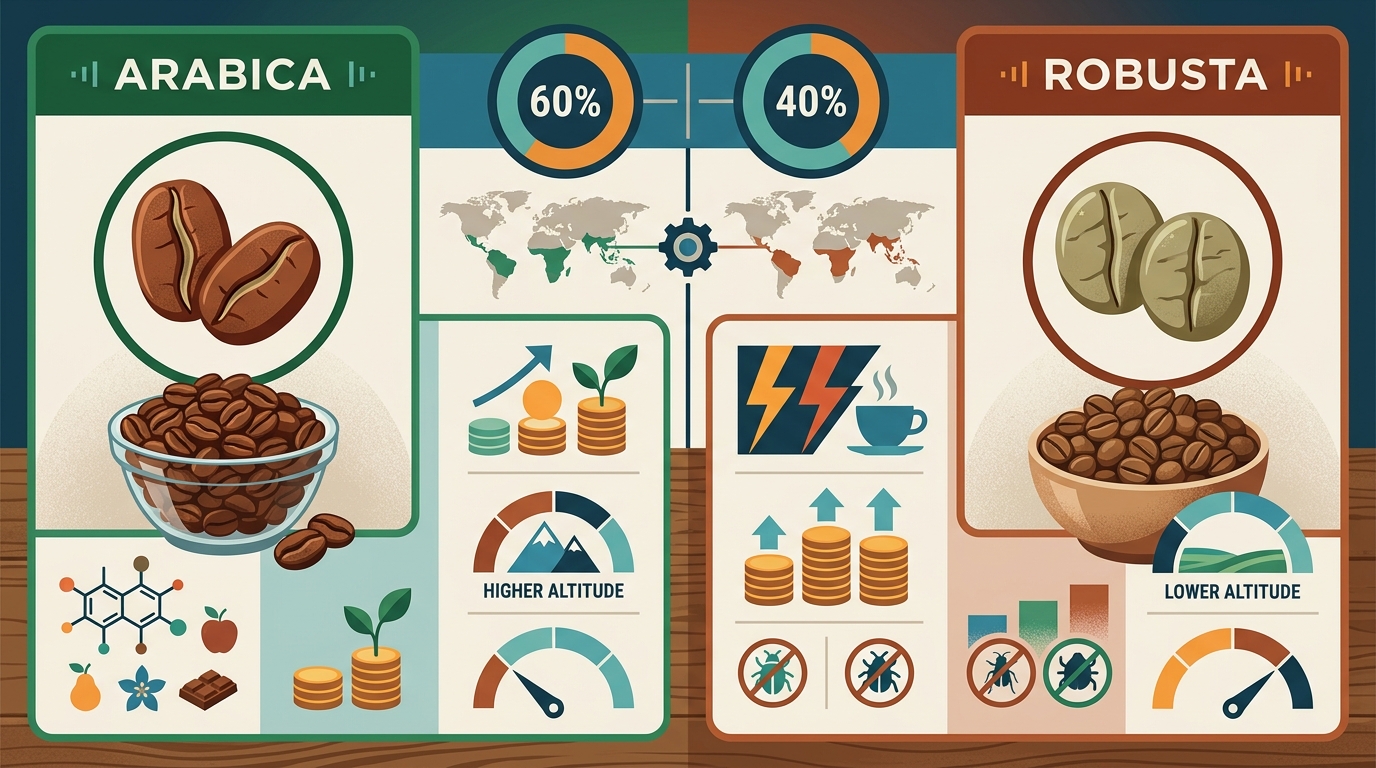
The global coffee industry is dominated by two primary species, Arabica and Robusta, which account for nearly all commercial production. According to the International Coffee Organization, Arabica beans represent approximately 60% of global coffee production, while Robusta makes up the remaining 40%. This distribution highlights a clear market preference for the smoother, more complex profiles associated with Arabica. However, Robusta remains a critical component in espresso blends and instant coffee due to its robust flavor and high caffeine content. Understanding the distinct characteristics of each bean is essential for selecting the right coffee for your daily routine. (Products ndash Just Coffee)
Flavor Profiles and Acidity
The most significant difference between these two species lies in their taste. Arabica beans are widely regarded as superior in terms of flavor complexity. They contain nearly twice the amount of lipids and sugars compared to Robusta. This chemical composition results in a smoother, sweeter cup with notes of fruit, berries, and sugar. Arabica also has a higher acidity, which contributes to its bright and lively character. This acidity is often described as wine-like, adding depth to the overall experience. (Blends ndash Just Coffee)
In contrast, Robusta beans have a much stronger, harsher taste. They are often described as having rubbery or burnt undertones. The flavor profile is less nuanced, with a heavy body and a distinct earthy or woody finish. Robusta lacks the fruity and floral notes found in Arabica. Instead, it offers a direct, intense punch that appeals to those who prefer a bold coffee experience. The bitterness in Robusta is more pronounced, which can be desirable in certain contexts, such as cutting through milk in a cappuccino.
Caffeine and Chemical Composition
Caffeine content is a major differentiator between the two bean types. Robusta beans contain almost double the caffeine of Arabica beans. This higher caffeine level acts as a natural pesticide, protecting the plant from pests and diseases. Consequently, Robusta is easier and cheaper to grow in lower altitudes and harsher climates. The high caffeine content also contributes to the bitter taste and the thick crema found in espresso made with Robusta.
Arabica beans have lower caffeine levels, which makes them more delicate and susceptible to pests. This sensitivity requires careful cultivation at higher altitudes, contributing to their higher cost. The lower caffeine content also means that Arabica coffee is generally less bitter. For consumers sensitive to caffeine, Arabica is often the preferred choice. However, those seeking a significant energy boost may find Robusta more effective. The chemical structure of the bean directly influences its physiological impact on the drinker.
Growing Conditions and Bean Structure
The physical structure of the bean also varies significantly. Arabica beans are oval-shaped with a curved center line. They are grown at high altitudes, typically between 600 and 2,000 meters above sea level. These high-altitude environments are cooler and more challenging for the plant. The slow maturation process at these heights allows the bean to develop more complex sugars and acids. This slow growth is crucial for achieving the high quality associated with specialty Arabica.
Robusta beans are rounder and harder than Arabica. They have a straight center line. Robusta plants are hardy and can thrive at lower altitudes, from sea level up to 600 meters. They are resistant to diseases and can grow in hotter, more humid conditions. This resilience makes Robusta a more reliable crop for farmers in challenging environments. The hard structure of the bean also allows it to withstand high-pressure roasting processes better than Arabica. This durability is why Robusta is often used in instant coffee production.
Brewing Applications and Roast Levels
The choice between Arabica and Robusta often depends on the brewing method. Arabica is the standard for most specialty coffee shops and home brewing methods. It shines in pour-over, drip coffee, and French press preparations. The clarity of flavor and acidity in Arabica allows for a nuanced tasting experience. Roasting Arabica beans lightly or medium preserves their delicate floral and fruity notes. Dark roasting can mask these subtle flavors, so lighter roasts are often recommended.
Robusta is frequently used in espresso blends. The high caffeine and oil content create a thick, persistent crema on top of the espresso shot. This crema is a hallmark of quality espresso in many traditional Italian cafes. Robusta is also the primary bean used in instant coffee. Its strong flavor stands up well to the processing methods required for instant production. When roasting Robusta, a dark roast is common to mitigate its natural bitterness. This creates a bold, smoky flavor profile that pairs well with milk and sugar.
Price and Value Analysis
Price is a direct reflection of the growing and processing costs associated with each bean. Arabica is generally more expensive than Robusta. The high-altitude requirements, sensitivity to pests, and lower yield per plant contribute to the higher cost. Specialty Arabica beans can command premium prices in the market. This makes Arabica the choice for consumers prioritizing quality and flavor complexity over cost.
Robusta is significantly cheaper to produce and purchase. Its hardiness and high yield make it an economical choice for large-scale commercial production. This affordability is why Robusta is often found in lower-priced grocery store coffees and instant coffee products. However, the lower price does not always mean lower quality in terms of utility. For those who prioritize caffeine content and a bold flavor, Robusta offers excellent value. The cost difference is substantial, often doubling or tripling the price of Arabica compared to Robusta.
Key Takeaways
- Flavor Complexity: Arabica offers sweet, fruity, and acidic notes, while Robusta provides a strong, earthy, and bitter profile.
- Caffeine Levels: Robusta contains nearly double the caffeine of Arabica, making it a more potent stimulant.
- Growing Altitude: Arabica grows at high altitudes (600-2,000m), while Robusta thrives at lower elevations near sea level.
- Bean Structure: Arabica beans are oval with a curved line; Robusta beans are round with a straight line.
- Crema Production: Robusta creates a thicker, more persistent crema in espresso shots due to higher oil and sugar content.
- Market Share: Arabica accounts for approximately 60% of global coffee production, indicating its dominant market position.
- Price Point: Arabica is typically more expensive due to difficult growing conditions and lower yields.
Frequently Asked Questions
Is Arabica or Robusta better for espresso?
Many traditional espresso blends use a mix of both. Robusta adds crema and body, while Arabica provides flavor complexity. Pure Arabista espresso is also popular for its smoothness.
Does Robusta coffee have more caffeine?
Yes, Robusta beans contain almost double the caffeine of Arabica beans. This makes them a stronger choice for energy.
Why is Arabica more expensive?
Arabica is more expensive because it requires high-altitude growing conditions, is more susceptible to pests, and has lower yields.
Can I drink Arabica and Robusta together?
Absolutely. Blending the two allows you to balance the acidity of Arabica with the boldness of Robusta for a customized cup.
Which coffee is less acidic?
Robusta coffee is significantly less acidic than Arabica. It is often recommended for those with sensitive stomachs.
Is instant coffee made from Robusta?
Most instant coffee is made from Robusta beans because their strong flavor survives the dehydration process better.
What is the best roast for Robusta?
A dark roast is typically best for Robusta to reduce bitterness and highlight its bold, smoky characteristics.
Start Your Coffee Journey Today
Whether you prefer the nuanced sweetness of Arabica or the bold intensity of Robusta, the right bean can transform your daily ritual. Explore our curated collection of freshly roasted coffees to find your perfect match. Visit our All Coffees page to browse our full range. For those new to specialty coffee, our Sample Packs offer a convenient way to compare different profiles. Enjoy free shipping on all U.S. orders with Just Coffee.