
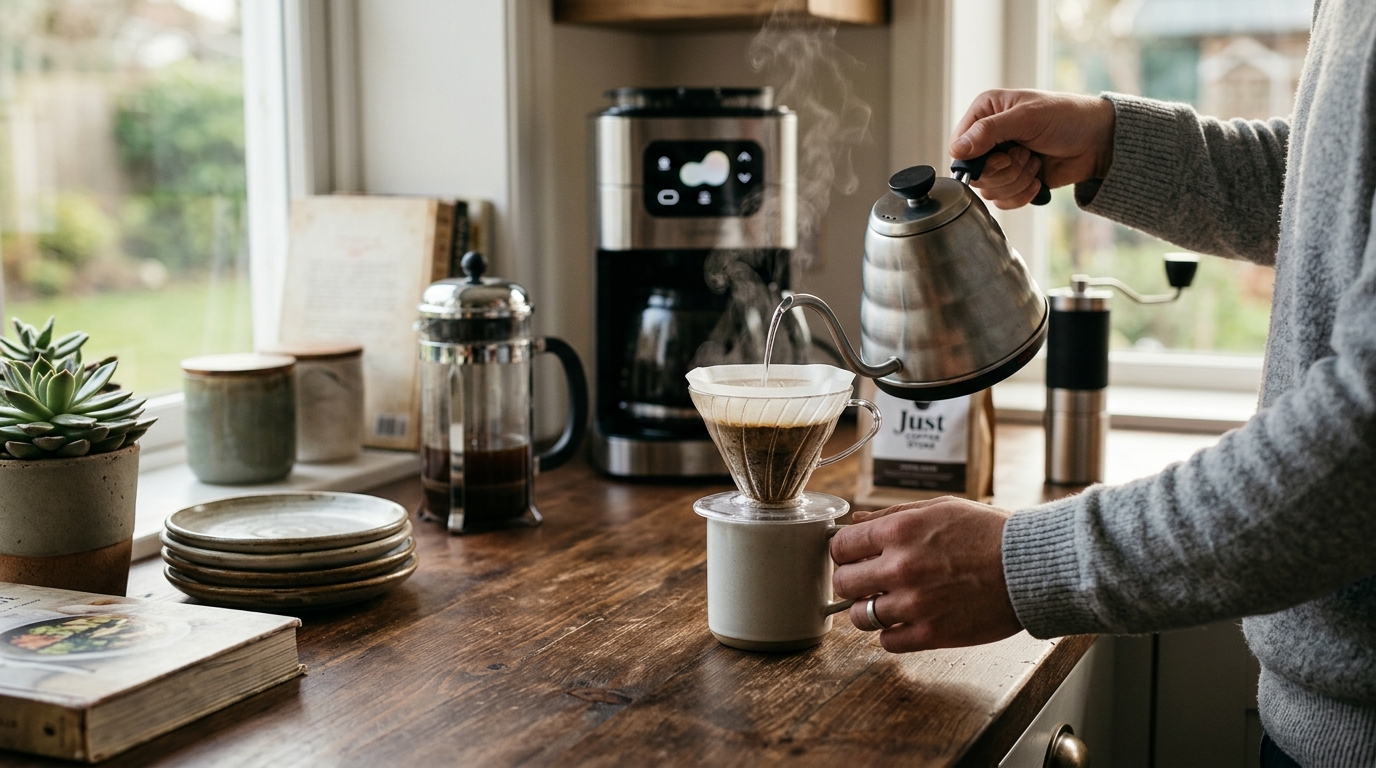
Coffee consumption has evolved from a simple morning ritual into a sophisticated hobby for millions of households. According to the National Coffee Association, approximately 64% of Americans drink coffee daily, with a significant portion preferring the quality and customization of home-brewed beverages over commercial alternatives. This shift highlights a growing demand for precision, consistency, and flavor clarity in every cup. Understanding the mechanics behind different brewing methods allows you to extract the full potential of your beans, whether you are sourcing single-origin varieties or rich blends from Just Coffee.
Understanding Brewing Mechanics
Before selecting a device, it is essential to grasp the fundamental variables that dictate coffee quality. The extraction process relies on four pillars: grind size, water temperature, brew time, and agitation. Extraction is the process of dissolving soluble compounds from coffee grounds into water. If you under-extract, the coffee tastes sour and thin. If you over-extract, it becomes bitter and astringent. Mastering these variables is the first step toward barista-quality results at home.
Water quality also plays a critical role. The Specialty Coffee Association recommends water with a total dissolved solids (TDS) level between 75 and 250 ppm. Using filtered water ensures that minerals interact correctly with the coffee oils, enhancing sweetness and clarity without introducing off-flavors. For those looking to experiment with different bean profiles, exploring single-origin coffees can provide a clearer understanding of how origin affects flavor notes.
The Pour-Over Method
Pour-over brewing is favored by enthusiasts who prioritize clarity and complexity in their cup. This method involves pouring hot water over coffee grounds contained in a filter, allowing gravity to pull the liquid through. The result is a clean, bright cup that highlights the nuanced flavors of the bean.
Equipment and Technique
The most popular devices include the Hario V60, Chemex, and Kalita Wave. Each has a unique cone shape and flow rate, which affects the extraction speed. A medium-fine grind is typically recommended to balance extraction time. Pouring in slow, concentric circles ensures even saturation of the grounds. This technique requires patience and practice, but the reward is a highly customizable brew that changes with every adjustment.
According to industry data, pour-over methods are particularly effective for light to medium roast beans. These roasts retain more of their origin characteristics, such as floral or fruity notes, which can be easily washed out by heavier brewing methods. If you are new to this style, starting with a sample pack allows you to test how different origins perform under this method.
The French Press Guide
The French press, or press pot, is one of the oldest and most robust brewing methods. It is an immersion brewer, meaning the coffee grounds steep directly in water for several minutes before being separated by a metal mesh filter. This process allows natural oils and fine particles to remain in the cup, creating a full-bodied, rich texture.
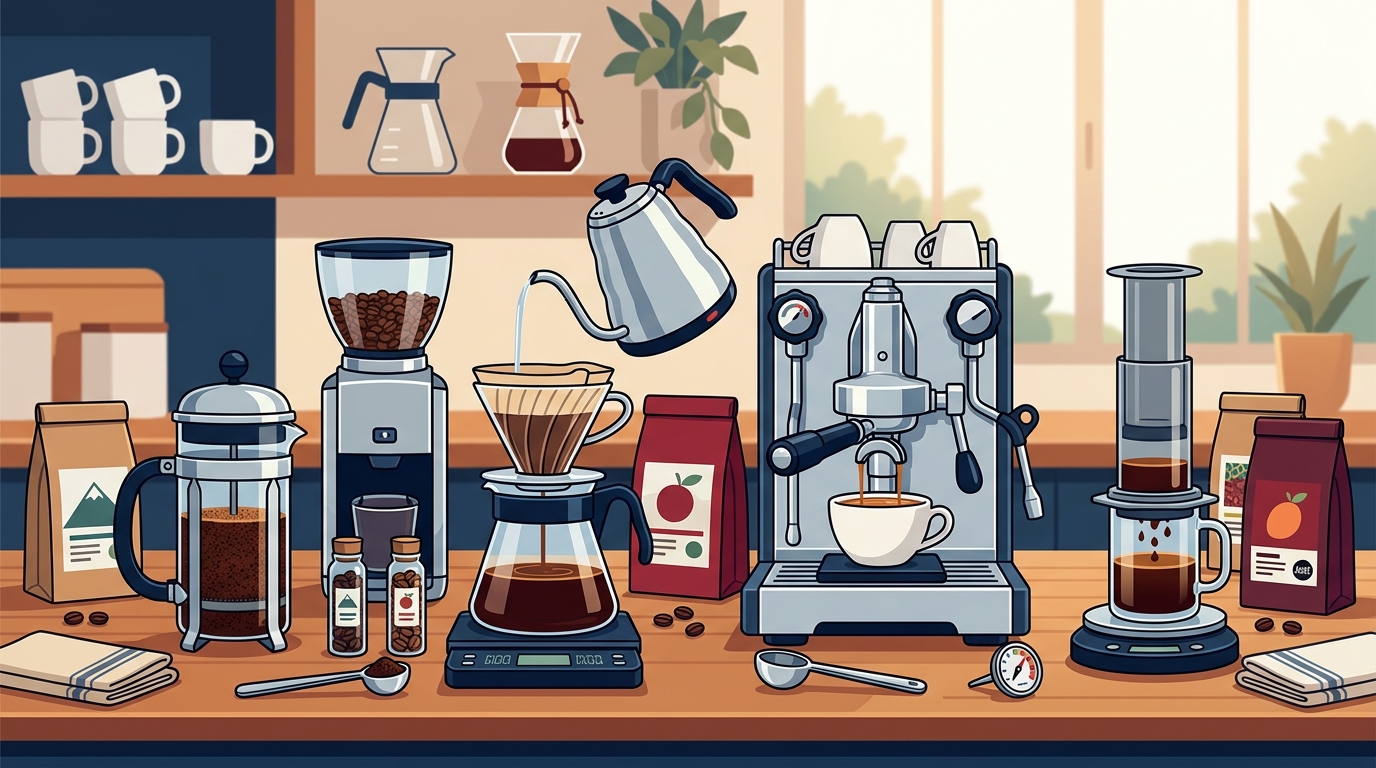
Why Choose Immersion?
Immersion brewing is forgiving and consistent. Because the grounds are fully submerged, the extraction is uniform across the entire batch. This makes it an excellent choice for beginners who want reliable results without precise pouring techniques. The metal filter also permits more oils to pass through compared to paper filters, resulting in a heavier mouthfeel.
However, the trade-off is clarity. The sediment at the bottom of the press can make the coffee taste muddy if left too long. It is crucial to plunge immediately after the recommended brew time, usually four minutes. For those who enjoy a bold, traditional coffee experience, the French press remains a timeless staple. You can find high-quality beans suited for this method in the blends collection, which are often crafted to stand up to heavy brewing styles.
Espresso and Pressure Brewing
Espresso is not a type of bean but a method of brewing. It forces hot water through finely ground coffee at high pressure, typically 9 bars. This rapid extraction produces a concentrated shot topped with crema, a golden foam of emulsified oils. Espresso serves as the base for many popular drinks, including lattes and cappuccinos.
Home Espresso Challenges
While home espresso machines have become more accessible, they require significant investment and maintenance. Consistency is the biggest challenge. Small variations in grind size or tamping pressure can drastically alter the taste. According to a 2023 report on home brewing trends, the number of households investing in espresso equipment has grown by 15% annually, driven by the desire to replicate café experiences.
For those intimidated by the complexity, manual lever machines or pod systems offer a middle ground. Pod systems provide convenience but sacrifice freshness and environmental sustainability. Manual machines offer control but demand skill. Regardless of the path, using fresh, high-quality beans is non-negotiable for good espresso. Stale beans will produce flat, sour shots regardless of the machine's quality.
Cold Brew and Immersion
Cold brew has surged in popularity due to its smooth, low-acid profile. This method involves steeping coarse coffee grounds in cold or room-temperature water for 12 to 24 hours. The long extraction time at low temperatures reduces the solubility of acidic compounds, resulting in a naturally sweet and mellow concentrate.
Concentration and Dilution
Cold brew is typically brewed as a concentrate, meant to be diluted with water or milk before drinking. This flexibility makes it ideal for hot climates or for those sensitive to acidity. The process is also highly efficient for batch preparation. You can brew a week's supply in one go, making it perfect for busy mornings.
Research indicates that cold brew consumption has increased significantly among younger demographics, who prioritize health and convenience. The low acidity is often cited as a benefit for those with digestive sensitivities. To get the best results, use a coarse grind to prevent over-extraction and bitterness. Exploring flavored coffees can also add a unique twist to your cold brew routine, offering dessert-like qualities without added sugar.
Brewing Method Comparison
Choosing the right method depends on your priorities: speed, body, clarity, or convenience. The table below summarizes the key characteristics of each major brewing style.
| Method | Brew Time | Body/Texture | Clarity | Best For |
|---|---|---|---|---|
| Pour-Over | 3-4 minutes | Light to Medium | High | Highlighting origin flavors |
| French Press | 4 minutes | Full/Heavy | Low | Rich, oily texture |
| Espresso | 25-30 seconds | Dense/Creamy | N/A | Concentrated shots and milk drinks |
| Cold Brew | 12-24 hours | Smooth/Light | Medium | Low acidity and convenience |
| AeroPress | 1-2 minutes | Medium/Varied | High | Versatility and travel |
Key Takeaways
- Grind Freshness: Grinding beans immediately before brewing preserves volatile aromatics and prevents oxidation.
- Water Quality: Using filtered water with balanced minerals enhances extraction and flavor clarity.
- Method Diversity: No single method is superior; each highlights different aspects of the coffee bean.
- Bean Selection: Light roasts suit pour-over, while dark roasts excel in French press and espresso.
- Consistency: Measuring coffee and water by weight (grams) is more accurate than using volume (cups).
- Temperature Control: Water between 195°F and 205°F is ideal for most hot brewing methods.
- Equipment Maintenance: Regular cleaning of brewers prevents stale oil buildup and off-flavors.
Frequently Asked Questions
What is the easiest coffee brewing method for beginners?
The French press is often considered the easiest method because it requires minimal technique and no special pouring skills. Simply add grounds, pour water, wait, and press. It offers a forgiving margin for error while producing a high-quality cup.
How does cold brew differ from iced coffee?
Cold brew is steeped in cold water for an extended period, resulting in low acidity and a smooth taste. Iced coffee is typically hot-brewed coffee that is cooled down and poured over ice, which can lead to higher acidity and potential dilution.
Is a burr grinder better than a blade grinder?
Yes, a burr grinder provides a consistent and uniform grind size, which is critical for even extraction. Blade grinders chop beans unevenly, leading to a mix of fine dust and coarse chunks, which causes bitter and sour flavors simultaneously.
Can I use any coffee beans for espresso?
While you can use any bean, espresso blends are specifically crafted to withstand high pressure and produce rich crema. Darker roasts and beans with higher oil content generally perform better in espresso machines, providing a bold and balanced shot.
How often should I clean my coffee maker?
You should rinse your brewer after every use to remove coffee oils and grounds. Deep cleaning with a descaling solution should be done monthly, depending on your water hardness, to prevent mineral buildup that affects taste and machine longevity.
What is the ideal coffee-to-water ratio?
A standard starting ratio is 1:16, meaning one gram of coffee for every 16 grams of water. This can be adjusted to taste; a 1:15 ratio yields a stronger cup, while a 1:17 ratio produces a lighter, more tea-like beverage.
Why does my pour-over taste bitter?
Bitterness in pour-over coffee is usually caused by over-extraction. This can happen if the grind is too fine, the water is too hot, or the brew time is too long. Adjusting to a coarser grind or lowering the water temperature can resolve this issue.
Start Your Journey
Mastering at-home coffee brewing is a rewarding journey that enhances your daily routine and deepens your appreciation for the craft. Whether you prefer the clarity of a pour-over, the richness of a French press, or the intensity of espresso, the right method and quality beans make all the difference. Explore our curated collection of freshly roasted coffees to find your perfect match. Visit Just Coffee today to discover blends and single-origins that elevate your home brewing experience.