
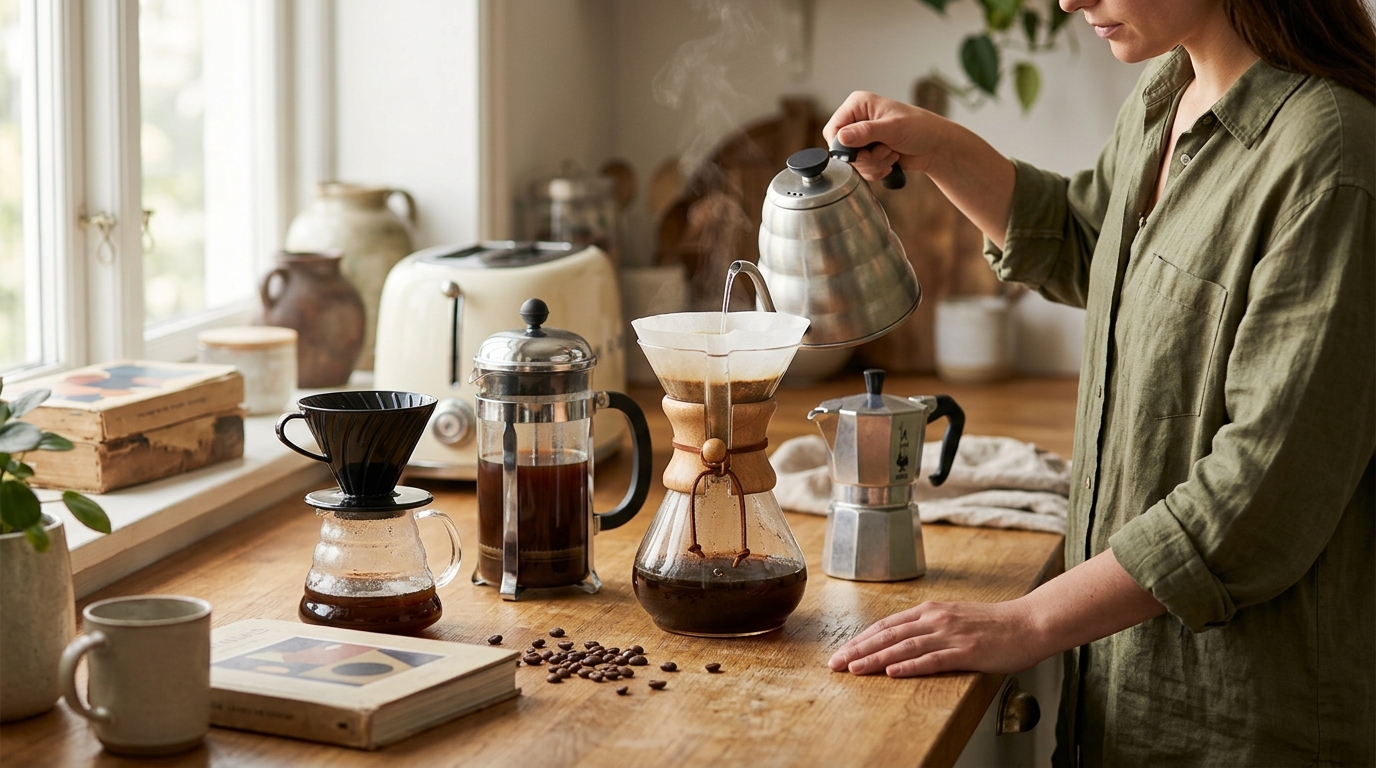
Coffee consumption has evolved from a simple morning ritual into a complex sensory pursuit for millions of households. According to the National Coffee Association, daily coffee drinking has reached historic highs, with nearly 66% of Americans consuming coffee every day. This surge in home brewing is driven by a desire for quality, consistency, and the economic benefits of preparing coffee outside of commercial cafes. Whether you are a novice looking for simplicity or a connoisseur seeking precision, understanding the mechanics of extraction is the first step toward a superior cup.
Understanding Coffee Extraction
Before selecting a brewing device, it is essential to grasp the fundamental principle of coffee preparation. Coffee brewing is the process of extracting soluble compounds from ground coffee beans using water. The quality of the final cup depends heavily on the balance between extraction time, water temperature, and grind size. Scientific studies on coffee indicate that under-extraction leads to sour, weak flavors, while over-extraction results in bitter, astringent notes. Mastering this balance allows you to highlight the unique origin characteristics of your beans, such as the fruity notes found in Ethiopian single-origin coffees or the chocolatey depth of Latin American blends.
Grind consistency is equally critical. Different methods require specific particle sizes to control the flow rate and surface area exposure. For instance, a fine grind is necessary for espresso to create resistance, while a coarse grind prevents over-extraction in French presses. Using a quality burr grinder ensures uniform particle size, which is the single most impactful upgrade for any home brewer.
Pour-Over Methods
Pour-over brewing is a manual method where hot water is poured over coffee grounds in a filter. This method offers unparalleled control over the brewing variables, allowing the brewer to manipulate flavor profiles with precision. It is ideal for those who appreciate clarity and complexity in their coffee.
The Drip Filter Advantage
Traditional drip filters, such as those used in automatic brewers or manual cone drippers, rely on gravity to pull water through the grounds. This method produces a clean cup with minimal sediment. The paper filter traps oils and fine particles, resulting in a bright, tea-like body. This is particularly effective for light-roast beans, which often possess delicate floral and citrus notes that can be masked by heavier oils.
Manual Control and Technique
Manual pour-over techniques, such as the V60 or Chemex, require a steady hand and consistent pouring speed. The brewer can adjust the pour rate to influence extraction time. A slower pour increases contact time, enhancing sweetness, while a faster pour reduces it, increasing acidity. This method is perfect for enthusiasts who enjoy the ritual of brewing and want to experiment with different single-origin coffee pods or ground beans to find their perfect match.
Immersion Brewing
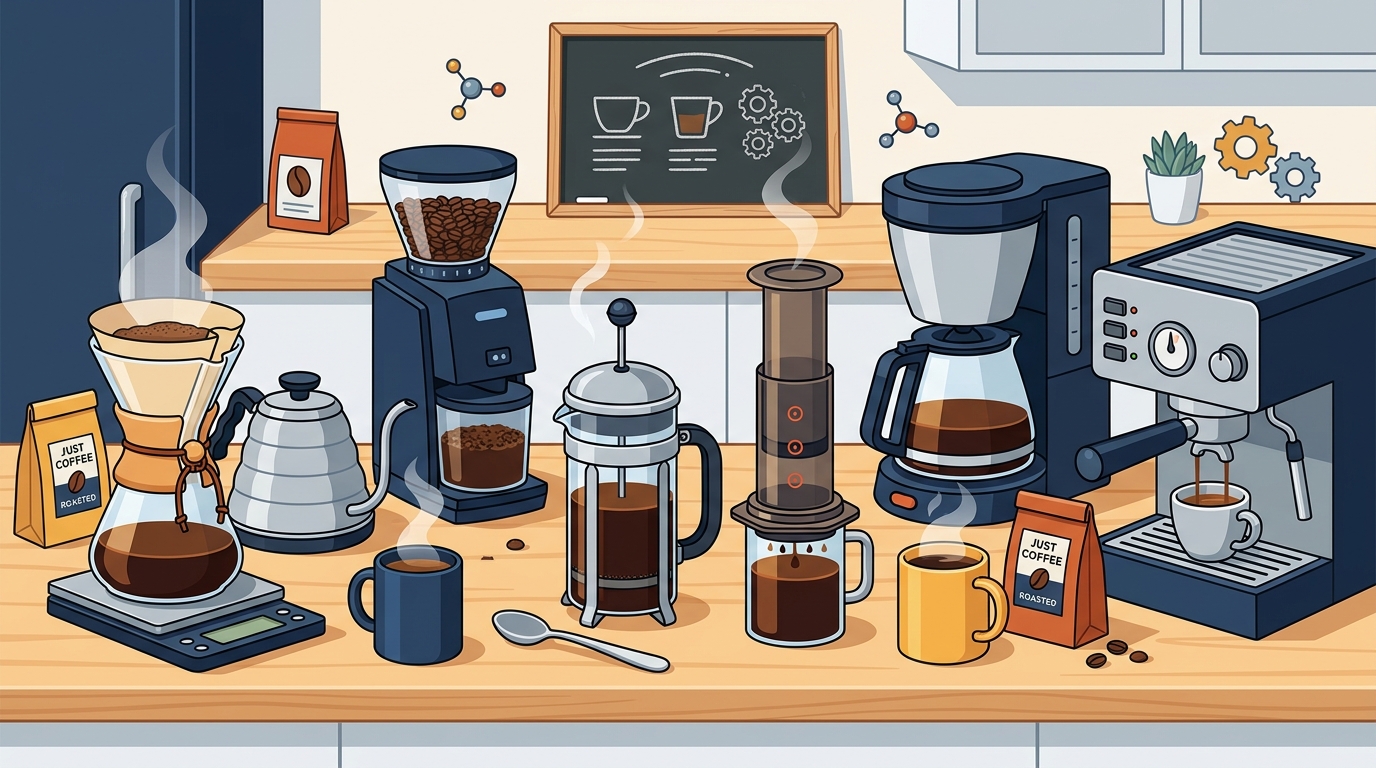
Immersion brewing involves steeping coffee grounds in water for a set period before separating the grounds from the liquid. This method is known for producing a full-bodied, rich cup with a consistent flavor profile because the grounds are fully saturated throughout the brewing process.
The French Press
The French press is a classic immersion brewer that uses a plunger with a metal mesh filter. It allows natural oils and fine particles to remain in the cup, creating a heavy body and intense flavor. This method is forgiving and simple, making it excellent for beginners. However, it requires a coarse grind to prevent sediment from passing through the mesh. The French press is particularly well-suited for dark roasts, which benefit from the full extraction of their bold, smoky characteristics.
The AeroPress
The AeroPress combines immersion and pressure brewing, offering versatility and speed. It uses a plastic chamber and a rubber seal to create a tight seal, allowing for quick brewing times of just one to two minutes. The AeroPress is durable, portable, and easy to clean. It can produce both espresso-like concentrate and standard drip-style coffee depending on the recipe. Its ability to handle various grind sizes and brew times makes it a favorite among coffee travelers and experimenters.
Pressure-Based Systems
Pressure brewing forces hot water through tightly packed coffee grounds at high pressure. This method extracts flavors quickly and creates a layer of crema, a creamy foam on top of the coffee, which is highly prized in espresso culture.
Espresso Machines
True espresso machines use pumps to generate nine bars of pressure, the standard for extracting espresso. This method requires a fine, consistent grind and precise water temperature control. Espresso serves as the base for many popular coffee drinks, including lattes and cappuccinos. The intensity of espresso highlights the richness of dark roast blends, such as the Italian Roast or French Roast available in our collection.
Moka Pots
For those without a high-end espresso machine, the Moka pot offers an affordable alternative. It uses steam pressure from boiling water in a lower chamber to push water through the coffee grounds into an upper chamber. The resulting coffee is strong and concentrated, closely mimicking espresso. It is a stovetop staple in many households and is ideal for those who enjoy a robust, bold cup without the complexity of machine maintenance.
Cold Brewing Techniques
Cold brewing involves steeping coffee grounds in cold or room-temperature water for an extended period, typically 12 to 24 hours. This method extracts fewer acids and oils than hot brewing, resulting in a smoother, less bitter concentrate.
The Science of Cold Extraction
Because cold water extracts compounds more slowly than hot water, the brewing time must be significantly longer. This slow process highlights the natural sweetness and chocolate notes of the coffee while minimizing acidity. Cold brew is particularly popular in warm climates and among individuals with sensitive stomachs. The Cold Brew Coffee blend is specifically crafted to optimize this method, ensuring a balanced and refreshing concentrate.
Concentrate vs. Ready-to-Drink
Cold brew can be prepared as a concentrate, which is diluted with water or milk before serving, or as a ready-to-drink beverage. The concentrate method offers flexibility, allowing you to adjust the strength to your preference. It also has a longer shelf life, lasting up to two weeks in the refrigerator. This makes it an efficient option for busy households who want to prepare their coffee in advance.
Choosing Your Brewing Method
Selecting the right brewing method depends on your personal preferences, budget, and lifestyle. Consider the following factors when making your decision.
| Brewing Method | Flavor Profile | Complexity | Best For |
|---|---|---|---|
| Pour-Over | Clean, Bright, Complex | High | Light Roasts, Enthusiasts |
| French Press | Full-Bodied, Rich, Oily | Low | Dark Roasts, Beginners |
| Espresso | Intense, Concentrated, Crema | Very High | Milk Drinks, Bold Flavors |
| Cold Brew | Smooth, Low Acid, Sweet | Medium | Convenience, Summer Months |
| AeroPress | Versatile, Clean to Rich | Medium | Travel, Experimentation |
If you value convenience and consistency, single-serve options like coffee pods provide a quick and mess-free alternative. For those who prioritize ritual and control, manual methods offer a deeper connection to the craft. Regardless of your choice, the quality of your beans is paramount. Exploring our wide selection of coffees will help you find the perfect companion for your chosen method.
Key Takeaways
- Extraction Balance: Proper extraction time and grind size are critical to avoiding sour or bitter flavors.
- Grind Consistency: A quality burr grinder is the most important investment for any home brewer.
- Method Versatility: Pour-over highlights clarity, while immersion methods emphasize body and richness.
- Cold Brew Benefits: Cold brewing reduces acidity and creates a smooth, sweet concentrate.
- Bean Quality: The origin and roast of your coffee significantly impact the final taste profile.
- Equipment Choice: Choose equipment that matches your lifestyle, from manual pour-overs to automated pods.
- Experimentation: Don't be afraid to adjust variables to find your perfect cup.
Frequently Asked Questions
What is the easiest coffee brewing method for beginners?
The French press is often considered the easiest method for beginners due to its simplicity and forgiveness. It requires only coarse grounds, hot water, and a timer. There is no need for precise pouring techniques or complex equipment. The immersion process ensures even extraction, making it difficult to produce a bad cup of coffee.
How does cold brew differ from iced coffee?
Cold brew is made by steeping coffee grounds in cold water for an extended period, resulting in a smooth, low-acid concentrate. Iced coffee is typically hot-brewed coffee that is cooled down and poured over ice. The brewing process affects the chemical composition, with cold brew having significantly less acidity and a different flavor profile.
Can I use any coffee beans for espresso?
While you can use any bean for espresso, beans labeled for espresso are typically roasted darker to withstand the high-pressure extraction. These roasts are designed to produce a rich crema and bold flavor. Using light roast beans for espresso can result in a sour and under-extracted shot. Our espresso blends are optimized for this method.
What is the best grind size for pour-over coffee?
The best grind size for pour-over coffee is medium, resembling sea salt. This size allows water to flow through at an optimal rate, balancing extraction time and flavor clarity. Too fine a grind can lead to over-extraction and bitterness, while too coarse a grind can result in under-extraction and sourness.
How long does cold brew last in the refrigerator?
Cold brew concentrate can last up to two weeks in the refrigerator when stored in an airtight container. The low acidity and cold temperature inhibit bacterial growth, making it a stable and convenient option for daily consumption. Diluted cold brew should be consumed within a day for best quality.
Is a French press better than a drip coffee maker?
The choice between a French press and a drip coffee maker depends on personal preference. French presses produce a fuller-bodied cup with more oils, while drip makers offer a cleaner, brighter taste. Drip makers are generally more convenient and consistent, while French presses offer more control over brewing time and temperature.
What is the purpose of blooming coffee?
Blooming is the process of pouring a small amount of hot water over the coffee grounds and waiting for 30 to 45 seconds before continuing the brew. This allows the coffee to release carbon dioxide, which can interfere with extraction if not allowed to escape. Blooming ensures a more even and flavorful extraction, particularly for fresh roasted beans.
Start Brewing Today
Whether you prefer the ritual of a manual pour-over or the convenience of single-serve pods, the right brewing method can transform your daily coffee experience. Explore our curated collection of premium coffees and artisan teas to find the perfect blend for your taste. Visit Just Coffee to start your journey toward the perfect cup.