
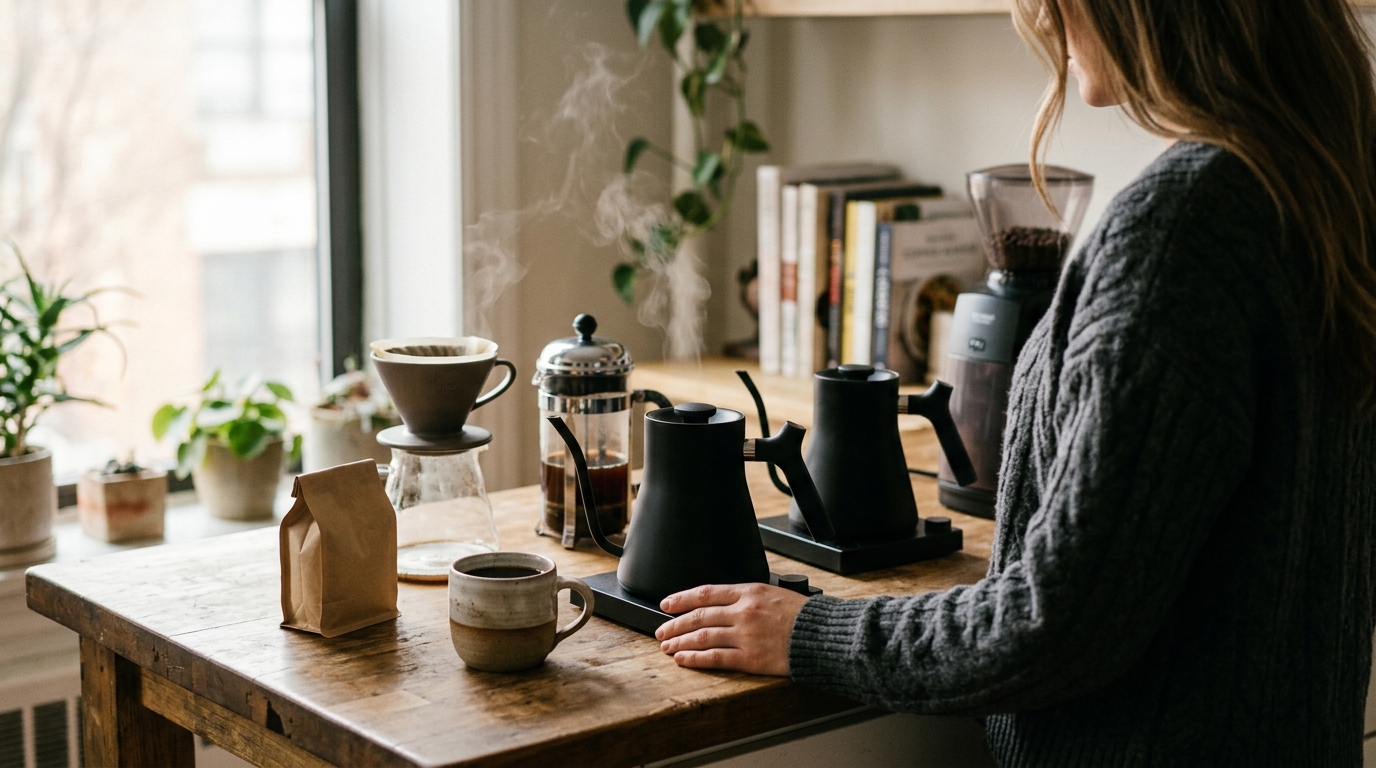
The global coffee industry continues to expand rapidly, with market reports indicating that the specialty coffee segment is growing at a significant annual rate. According to data from the National Coffee Association, nearly 64% of Americans drink coffee daily, driving a massive shift toward high-quality at-home preparation. This surge in home consumption has elevated the importance of selecting the right brewing method to extract the full potential of freshly roasted beans. Whether you are seeking the clarity of a pour-over or the intensity of an espresso, understanding the mechanics behind each technique is essential for achieving café-quality results in your own kitchen.
Understanding Brewing Mechanics
Before investing in equipment, it is crucial to understand the fundamental principles that govern coffee extraction. Coffee brewing is essentially the process of dissolving soluble compounds from ground coffee beans into water. The efficiency of this process depends on several variables, including water temperature, grind size, and contact time.
Extraction is the process of dissolving desirable flavors and aromas from the coffee grounds into the water. Under-extraction results in sour, weak coffee, while over-extraction leads to bitter, harsh flavors. Mastering these variables allows you to tailor your brew to your specific taste preferences.
Another critical concept is Agitation, which refers to the movement of water through the coffee bed. Proper agitation ensures even saturation of the grounds, preventing channeling where water finds paths of least resistance. This is particularly important in methods like pour-over and espresso.
Finally, Filtration plays a significant role in the final mouthfeel and clarity of the cup. Paper filters trap oils and fine particles, resulting in a clean, bright cup. Metal mesh filters allow more oils to pass through, creating a fuller body and richer texture.
The Pour-Over Method
The pour-over method is a manual brewing technique that offers exceptional control over the brewing process. It involves pouring hot water over coffee grounds contained in a filter, allowing gravity to pull the water through the grounds and into a carafe or mug below.
Why Choose Pour-Over?
Pour-over coffee is renowned for its clarity and complexity. Because the water passes through the grounds relatively quickly and the filter removes most oils, the resulting cup highlights the delicate floral and fruity notes of single-origin beans. This method is ideal for those who appreciate a clean, tea-like body and want to taste the unique characteristics of their coffee.
Essential Equipment
To brew the perfect pour-over, you will need a dripper, such as a V60 or Kalita Wave, a gooseneck kettle for precise water flow control, and a scale for accurate measurement. Using freshly roasted beans from a reputable roaster, such as those available at Just Coffee, ensures the best possible flavor profile.
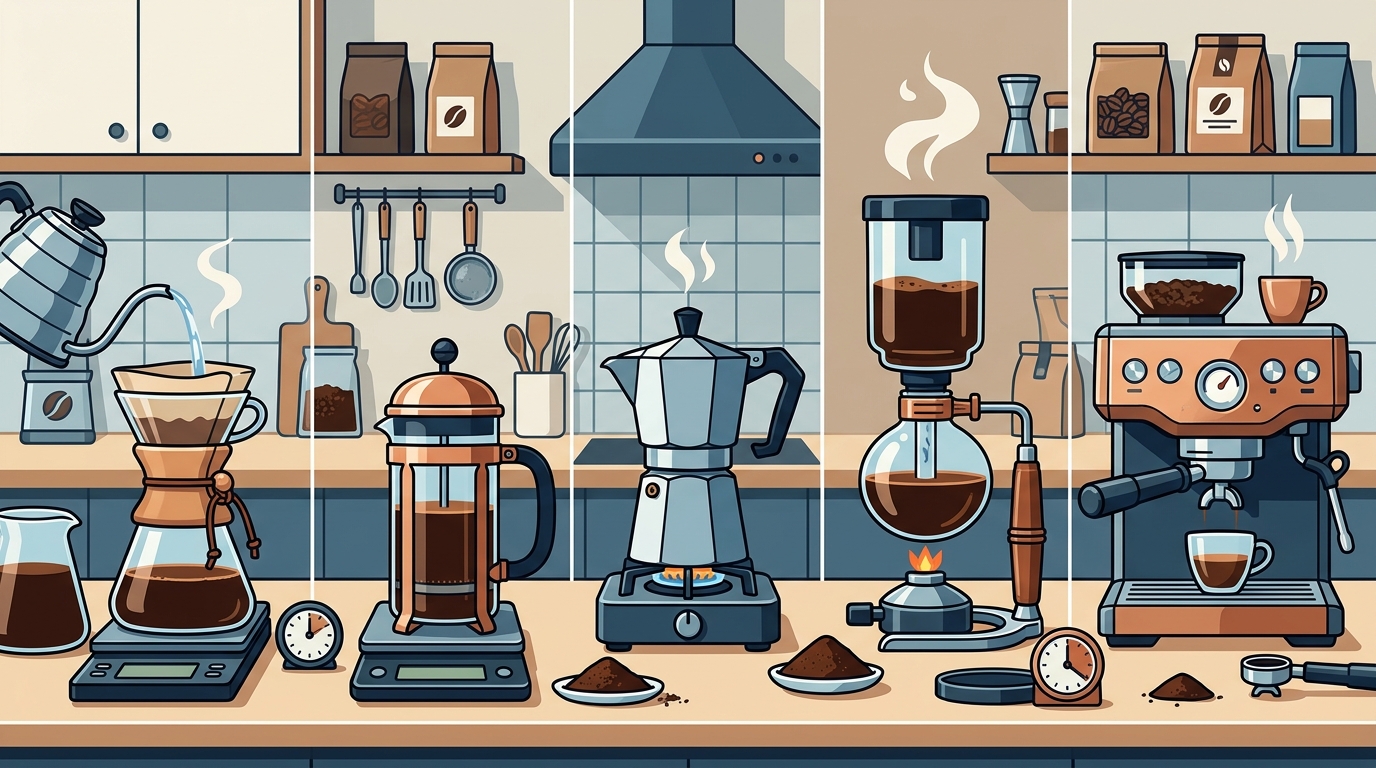
The French Press Guide
The French press, also known as a press pot or plunger pot, is one of the oldest and most popular brewing methods. It involves steeping coarse coffee grounds in hot water for several minutes before pressing a metal mesh filter down to separate the grounds from the liquid.
Advantages of Immersion Brewing
Immersion brewing, like that used in the French press, allows all the coffee grounds to be in contact with the water for the entire brew time. This results in a full-bodied, rich cup with a heavier mouthfeel. The metal filter allows natural oils to remain in the coffee, contributing to its robust flavor.
Tips for Best Results
Use a coarse grind size to prevent sediment from passing through the mesh filter. Steep the coffee for four minutes, then press the plunger down slowly and steadily. Pour the coffee immediately to prevent over-extraction. For more information on selecting the right beans for immersion brewing, explore the Blends collection.
Espresso Basics
Espresso is a concentrated coffee brewed by forcing hot water under high pressure through finely ground coffee. It serves as the base for many popular coffee drinks, including lattes, cappuccinos, and macchiatos.
The Science of Pressure
Traditional espresso machines use 9 bars of pressure to extract the coffee. This high pressure forces the water through the compacted coffee puck quickly, creating a unique layer of crema on top. Crema is a golden-brown foam composed of emulsified oils and gases, which adds aroma and complexity to the shot.
Home Espresso Setups
While professional espresso machines can be expensive, there are many affordable options for home use, including lever machines and pump-driven models. Consistency in grind size is critical for espresso, as even small variations can significantly affect the extraction. Consider trying a Single Origin bean to experience the distinct flavors that espresso can highlight.
Cold Brew Trends
Cold brew coffee has gained immense popularity in recent years due to its smooth, low-acid profile. It is made by steeping coarse coffee grounds in cold or room temperature water for an extended period, typically 12 to 24 hours.
Why Cold Brew is Different
The cold brewing process extracts fewer acidic compounds and bitter oils compared to hot brewing methods. This results in a naturally sweeter, smoother coffee that is easier on the stomach. According to industry trends, cold brew sales have seen exponential growth, reflecting consumer demand for convenient, refreshing coffee options.
Concentrate vs. Ready-to-Drink
Many home brewers prefer making cold brew concentrate, which can be diluted with water or milk to taste. This method offers flexibility and allows for large-batch preparation. You can find high-quality beans suitable for cold brew in the Sample Packs to experiment with different flavor profiles.
Brewing Method Comparison
Choosing the right brewing method depends on your personal preferences, budget, and time constraints. The table below summarizes the key characteristics of each method.
| Brewing Method | Brew Time | Grind Size | Body | Complexity |
|---|---|---|---|---|
| Pour-Over | 2-4 minutes | Medium-Fine | Light to Medium | High |
| French Press | 4 minutes | Coarse | Full | Low |
| Espresso | 25-30 seconds | Extra Fine | Heavy | Very High |
| Cold Brew | 12-24 hours | Coarse | Medium | Low |
Key Takeaways
- Water Quality Matters: Use filtered water to avoid off-flavors from chlorine or minerals.
- Freshness is Key: Coffee beans begin to stale shortly after roasting. Visit Just Coffee for freshly roasted beans delivered to your door.
- Grind Size Consistency: Use a burr grinder for uniform particle size, which ensures even extraction.
- Ratio Control: A standard starting ratio is 1:16 (coffee to water), but adjust to taste.
- Temperature Precision: Ideal brewing temperature is between 195°F and 205°F (90°C to 96°C).
- Experimentation: Try different beans and methods to discover your perfect cup.
- Clean Equipment: Regularly clean your brewing gear to prevent rancid oil buildup.
Frequently Asked Questions
What is the best coffee grind size for pour-over?
The best grind size for pour-over is medium-fine, similar to table salt. This allows for proper extraction without over-extracting the bitter compounds.
How long should I steep coffee in a French press?
You should steep coffee in a French press for approximately four minutes. Steeping longer can lead to over-extraction and a bitter taste.
Is cold brew less acidic than hot coffee?
Yes, cold brew is generally less acidic than hot coffee. The cold water extraction process yields fewer acidic compounds, resulting in a smoother taste.
What is the difference between a burr grinder and a blade grinder?
A burr grinder crushes beans between two revolving abrasive surfaces, producing a consistent grind size. A blade grinder chops beans with a spinning blade, resulting in uneven particles that can lead to inconsistent extraction.
Can I use any coffee beans for espresso?
While you can use any bean for espresso, dark roasts and blends specifically designed for espresso often provide the best crema and flavor profile. Explore our All Coffees collection for suitable options.
How do I clean my espresso machine?
Regular backflushing with a cleaning detergent and descaling with a vinegar solution or commercial descaler is recommended. Follow the manufacturer's instructions for specific maintenance schedules.
What is the ideal water temperature for brewing coffee?
The ideal water temperature is between 195°F and 205°F. Water that is too hot will over-extract the coffee, while water that is too cool will under-extract it.
How often should I replace my coffee filters?
You should replace paper filters with every brew. Metal filters should be cleaned thoroughly after each use and replaced every few months depending on usage.
Shop Fresh Roasted Coffee
Ready to elevate your home brewing experience? The quality of your coffee starts with the beans. At Just Coffee, we specialize in delivering freshly roasted coffee directly to your door. Our wide selection of blends, single origins, and sample packs ensures you find the perfect beans for your chosen brewing method. Enjoy free shipping on all U.S. orders and taste the difference that freshness makes.