

The global coffee industry is a multi-billion dollar ecosystem driven by consumer preference for both consistency and unique flavor profiles. According to market data, the demand for specialty coffee has surged, with consumers increasingly seeking transparency in their daily brew. Understanding the fundamental distinction between single-origin and blended coffee is essential for anyone looking to elevate their coffee experience. This guide breaks down the nuances of each type to help you make informed purchasing decisions.
What Is Single-Origin Coffee?
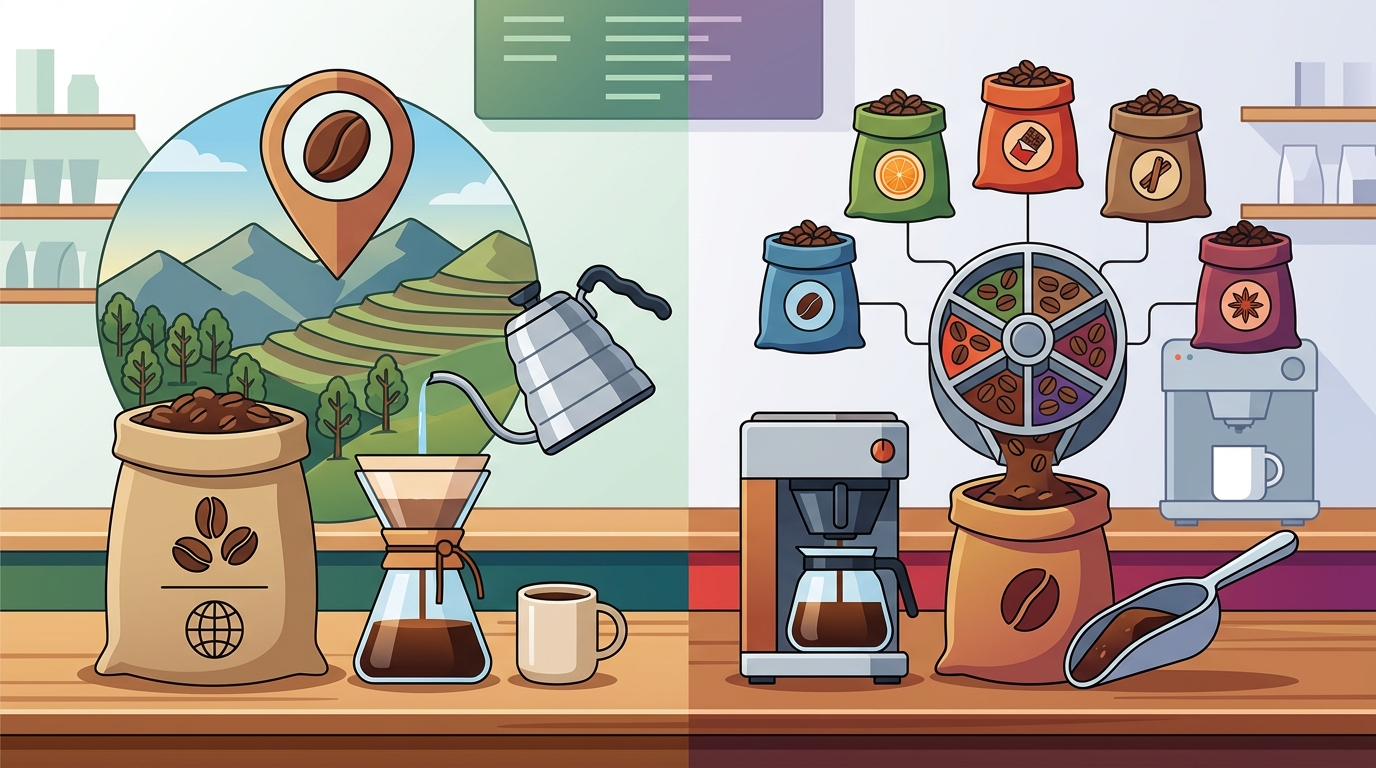
Single-origin coffee is defined as coffee that comes from one specific geographic location. This location could be a single farm, a specific cooperative, or even a distinct harvest lot within a larger region. The defining characteristic of single-origin beans is their traceability. When you buy single-origin coffee, you are buying a snapshot of a specific terroir. Terroir refers to the complete natural environment in which a particular crop is produced, including factors such as soil, rainfall, and sunlight.
This type of coffee highlights the unique flavors imparted by its origin. For example, beans from Ethiopia often exhibit bright, fruity notes, while those from Sumatra might offer earthy, herbal undertones. The purity of the flavor profile is the primary appeal for coffee enthusiasts who enjoy exploring the subtle differences in taste based on geography. At Just Coffee, we curate a selection of single-origin beans that allow you to taste the distinct character of each region.
Single-origin coffees are typically roasted to highlight their individual characteristics. Roasters avoid masking the natural flavors with heavy roasts. Instead, they use lighter to medium roasts to preserve the acidity and complexity that define the bean's origin. This approach requires high-quality green beans, as any defects in the bean will be more apparent in the final cup.
What Is Blended Coffee?
Blended coffee is created by mixing two or more different types of coffee beans. The goal of blending is to create a consistent flavor profile that remains stable regardless of seasonal changes in bean availability. Unlike single-origin coffee, which varies by harvest, a well-crafted blend aims for reliability. Coffee shops often rely on blends for their espresso machines because they provide a balanced shot that stands up well to milk and sugar.
Blenders combine beans with complementary characteristics. For instance, a barista might mix a bright, acidic bean from Central America with a dark, chocolatey bean from South America. The result is a cup that has both complexity and body. This technique allows roasters to create flavors that do not exist in nature. You can achieve specific taste notes, such as caramel or nutty profiles, by carefully selecting and proportioning the beans.
At Just Coffee, our blends are designed to offer a harmonious drinking experience. We carefully select beans that complement each other to ensure that every bag delivers a consistent and enjoyable taste. Blends are particularly popular for drip coffee makers and French presses, where a full-bodied flavor is desired.
Flavor Profiles and Complexity
The primary difference between single-origin and blended coffee lies in their flavor complexity. Single-origin coffees are known for their distinct and often intense flavor notes. Because the beans come from one place, they share a common genetic and environmental background. This results in a cup that tastes exactly like its origin. If you enjoy fruity, floral, or wine-like notes, single-origin is the superior choice.
Blended coffees, on the other hand, prioritize balance and harmony. The complexity in a blend comes from the interaction of different beans. A skilled roaster can create a blend that has the brightness of one bean and the sweetness of another. This creates a multi-layered flavor experience that is different from the purity of single-origin. Blends are often described as "smooth" or "rich" because the roaster can mask any harshness from individual beans.
Understanding these profiles helps you choose the right coffee for your palate. If you are looking to explore new tastes and understand the nuances of coffee, single-origin offers an educational journey. If you prefer a reliable, comforting cup that tastes the same every day, a blend is the practical choice. The scientific study of coffee chemistry shows that the chemical composition of beans varies significantly by region, which directly impacts the sensory experience.
Brewing Methods and Compatibility
Both single-origin and blended coffees can be brewed using various methods, but some pairings work better than others. Single-origin coffees are often recommended for pour-over methods, such as the V60 or Chemex. These methods allow the water to flow through the grounds slowly, extracting the delicate flavors and aromas of the bean. The clarity of the cup is enhanced by the purity of the single-origin bean.
Blended coffees are traditionally associated with espresso. The high pressure of an espresso machine extracts the oils and solids from the beans quickly. A blend provides the necessary body and crema to support this extraction. However, blends also work exceptionally well in automatic drip machines. The consistent flavor profile ensures that the coffee does not taste flat or acidic, which can happen with some light-roast single-origin beans in less precise brewers.
For French press brewing, medium to dark roasts of either type work well. The immersion method extracts more oils and solids, creating a heavier body. Single-origin beans from Sumatra or Brazil are excellent choices for French press because their earthy and chocolatey notes are amplified by the brewing process. You can explore our full collection of coffees to find the perfect match for your brewing equipment.
Comparison Table
The following table summarizes the key differences between single-origin and blended coffee to help you decide which is right for you.
| Feature | Single-Origin Coffee | Blended Coffee |
|---|---|---|
| Source | One specific farm or region | Multiple farms or regions |
| Flavor Profile | Distinct, unique, terroir-driven | Balanced, consistent, harmonious |
| Consistency | Varies by harvest and season | Consistent year-round |
| Brewing Best Fit | Pour-over, AeroPress | Espresso, Drip Machine |
| Price Point | Often higher due to rarity | Variable, often more affordable |
Key Takeaways
- Single-origin coffee comes from one geographic location, offering a unique taste of that region's terroir.
- Blended coffee mixes multiple beans to create a consistent and balanced flavor profile.
- Single-origin coffees are ideal for pour-over brewing to highlight delicate flavors.
- Blends are traditionally used for espresso to provide body and crema.
- The flavor of single-origin coffee can vary between harvests, while blends remain stable.
- Both types can be enjoyed in any brewing method, but some pairings enhance the experience.
- Choosing between the two depends on your preference for uniqueness versus consistency.
Frequently Asked Questions
Is single-origin coffee better than blended?
Neither is inherently better. Single-origin coffee is preferred by those who enjoy exploring unique, region-specific flavors. Blended coffee is preferred by those who value consistency and a balanced taste profile.
Can I blend my own coffee at home?
Yes, you can blend your own coffee at home. Many enthusiasts buy single-origin beans and mix them to create their custom blend. This allows you to experiment with different flavor combinations.
Why is single-origin coffee more expensive?
Single-origin coffee is often more expensive because it comes from specific, sometimes rare, farms or regions. The cost of cultivation, harvesting, and processing in these areas is typically higher.
What is the best brewing method for single-origin?
Pour-over methods like the V60 or Chemex are excellent for single-origin coffee. They allow for precise control over extraction, highlighting the bean's delicate flavors.
Do blends contain lower quality beans?
No, blends do not necessarily contain lower quality beans. Roasters often use high-quality single-origin beans to create complex and delicious blends. The goal is balance, not cost-cutting.
How does terroir affect coffee taste?
Terroir includes soil, climate, and altitude, all of which influence the chemical composition of the coffee bean. This results in distinct flavor notes that are unique to the region of origin.
Can I drink single-origin coffee with milk?
Yes, you can drink single-origin coffee with milk. However, the unique flavors might be masked by the milk. Lighter roasts and fruity single-origin beans are best enjoyed black to appreciate their complexity.
Where can I buy high-quality single-origin and blended coffee?
You can purchase high-quality single-origin and blended coffee from Just Coffee. We offer a wide selection of freshly roasted beans delivered directly to your door.
Shop Our Collection
Ready to experience the difference? Explore our curated selection of single-origin and blended coffees. Whether you prefer the unique character of a specific region or the balanced harmony of a expert blend, we have the perfect coffee for you. Visit our shop page to browse our latest arrivals and find your new favorite brew.