
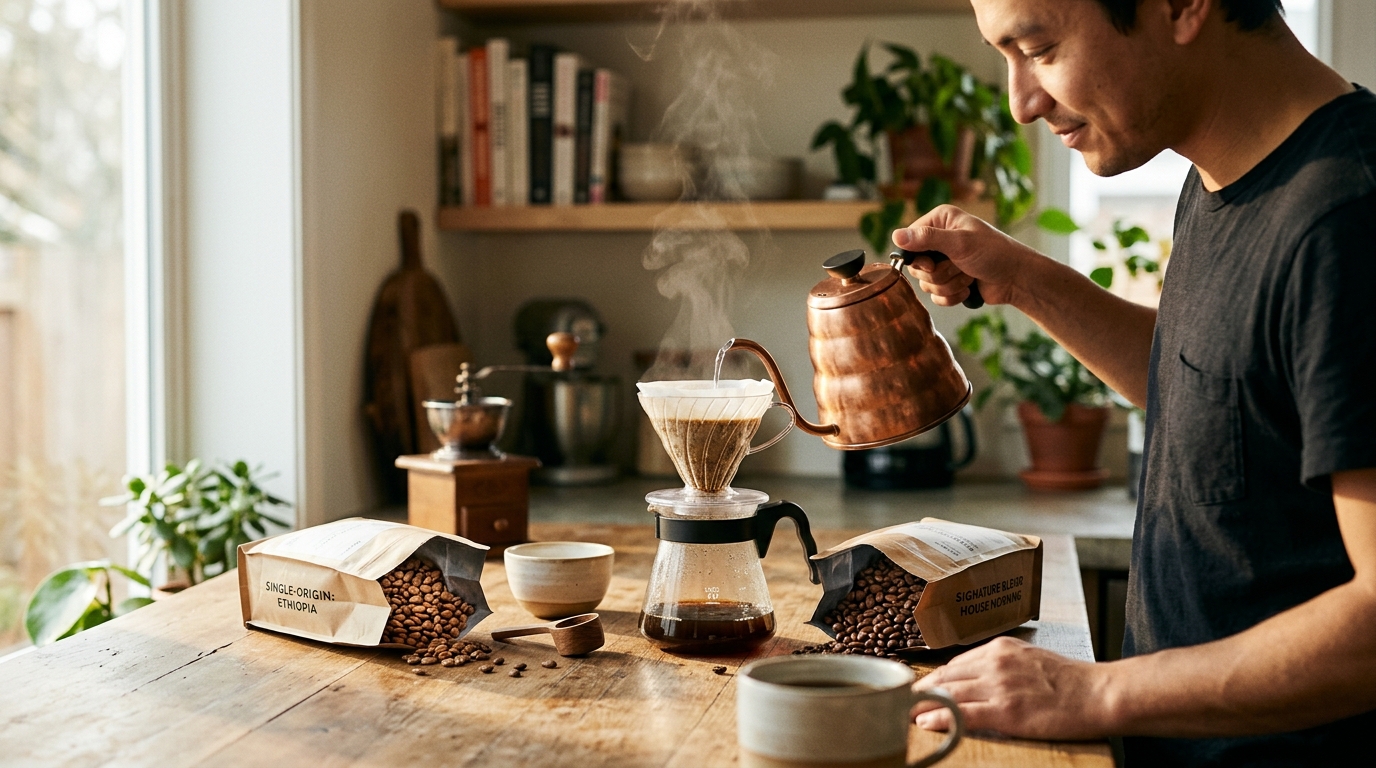
Understanding the distinction between single-origin and blended coffee is essential for any serious coffee enthusiast. According to agricultural research, the terroir of a coffee bean significantly influences its flavor profile, acidity, and body. Single-origin coffees come from one specific geographic location, offering a pure taste of that region. In contrast, blended coffees combine beans from multiple origins to create a consistent, balanced flavor profile. This guide explores the nuances of both to help you choose the perfect brew.
What is Single-Origin Coffee?
Single-origin coffee is defined as coffee that comes from one specific geographic location. This could be a single farm, a specific region, or even a single country. The term "terroir" is often used to describe how the soil, climate, and altitude of that location affect the bean's flavor. National Geographic reports that terroir plays a critical role in defining the unique characteristics of agricultural products like coffee.
When you buy single-origin coffee, you are essentially tasting the landscape of its origin. For example, a coffee from Ethiopia might have bright, fruity notes, while one from Sumatra might be earthy and full-bodied. This transparency allows consumers to trace the journey of their coffee from seed to cup. At Just Coffee, we prioritize sourcing high-quality single-origin beans to ensure freshness and authenticity.
Why Choose Single-Origin?
The primary appeal of single-origin coffee is its uniqueness. Each batch tells a story about the place where it was grown. If you enjoy exploring new flavors and understanding the nuances of different regions, single-origin is the way to go. It is also often associated with higher quality standards, as many single-origin beans are specialty-grade.
What is Blended Coffee?
Blended coffee is created by mixing two or more types of coffee beans. The goal of blending is to achieve a specific flavor profile that might not be possible with a single bean. Roasters combine beans with different characteristics to balance acidity, body, and sweetness. Scientific studies on coffee processing indicate that blending can enhance the overall stability and consistency of the final product.
Blends are often designed for specific brewing methods or to provide a consistent taste year-round. For instance, a morning blend might be crafted to be bold and smooth, while an espresso blend might focus on crema production and rich flavor. You can explore our curated blends collection to find a mix that suits your daily routine.
The Art of Blending
Blending is both a science and an art. Roasters must consider the roast level, origin, and processing method of each bean to create a harmonious cup. A well-crafted blend can offer complexity and depth that a single bean might lack. It also allows for the use of beans that complement each other, such as a bright African bean paired with a chocolatey South American bean.
Flavor Profiles and Complexity
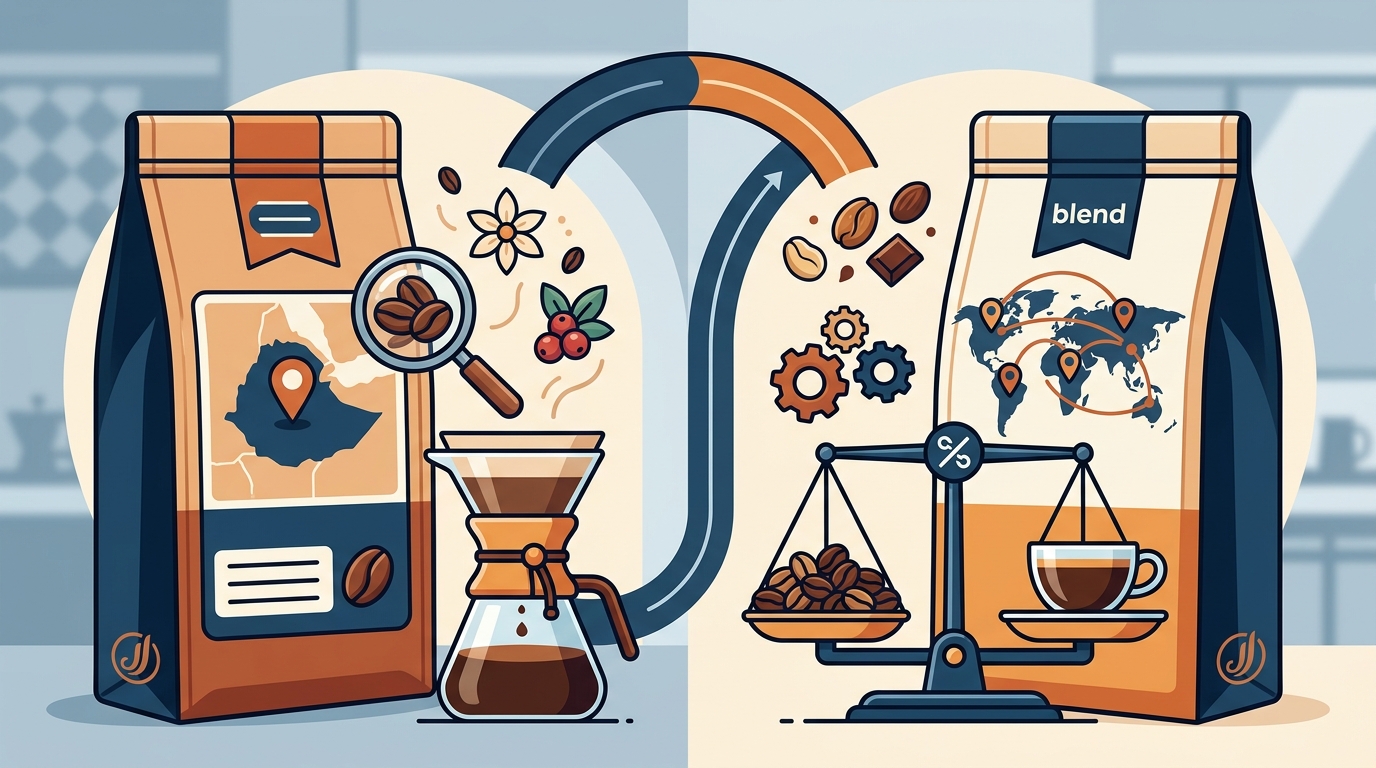
One of the most significant differences between single-origin and blended coffee is the flavor profile. Single-origin coffees tend to have more distinct and pronounced flavors. They can exhibit notes of fruit, flowers, nuts, or chocolate, depending on the origin. Research in food science suggests that the chemical composition of coffee beans varies significantly based on geographic origin, leading to diverse flavor compounds.
Blended coffees, on the other hand, aim for balance and harmony. The flavors are often more muted and integrated, creating a smooth and approachable cup. This makes blends ideal for those who prefer a consistent taste without the variability of single-origin beans. If you are looking for a reliable daily driver, a high-quality blend might be your best bet.
Consistency vs. Uniqueness
Consistency is a major advantage of blended coffee. Roasters can adjust the blend to ensure that the taste remains the same regardless of seasonal changes in bean availability. This is particularly important for commercial coffee shops that need to provide a uniform experience to their customers. Industry data shows that consistency is a key factor in customer retention for coffee brands.
Single-origin coffees, by contrast, are unique and variable. Each harvest may taste slightly different due to weather conditions, soil quality, and processing methods. This variability is part of the charm for many coffee lovers, as it offers a new experience with every bag. However, it can be challenging for those who prefer a predictable cup. At Just Coffee, we provide detailed tasting notes for each single-origin bean to help you understand what to expect.
Best Brewing Methods for Each
The choice between single-origin and blended coffee can also depend on your brewing method. Single-origin coffees are often best enjoyed through pour-over or drip brewing, which highlights their delicate flavors and aromas. These methods allow the unique characteristics of the bean to shine through. You can find single-origin options that are specifically roasted for these brewing styles.
Blended coffees are versatile and work well with various brewing methods, including espresso and French press. The balance of flavors in a blend can stand up to the intensity of espresso extraction or the full immersion of a French press. For those who enjoy a strong, bold cup, a dark roast blend might be the perfect choice.
Comparison of Brewing Suitability
| Feature | Single-Origin Coffee | Blended Coffee |
|---|---|---|
| Flavor Profile | Distinct, unique, terroir-driven | Balanced, consistent, harmonious |
| Brewing Method | Pour-over, Drip, Cold Brew | Espresso, French Press, Drip |
| Consistency | Variable by harvest | Highly consistent year-round |
| Best For | Exploring new flavors | Daily reliability |
Key Takeaways
- Single-origin coffee comes from one specific location, offering a unique taste of that region's terroir.
- Blended coffee combines beans from multiple origins to create a balanced and consistent flavor profile.
- Single-origin coffees are ideal for pour-over and drip brewing to highlight their delicate notes.
- Blends are versatile and work well with espresso and French press methods.
- Consistency is a key advantage of blended coffee, while single-origin offers uniqueness and variability.
- At Just Coffee, we offer a wide range of both single-origin and blended coffees to suit every preference.
- Understanding your taste preferences will help you choose between the purity of single-origin and the balance of blends.
Frequently Asked Questions
Is single-origin coffee better than blended?
Neither is inherently better; it depends on your taste preferences. Single-origin offers unique, distinct flavors, while blended provides consistency and balance.
Can I blend single-origin beans at home?
Yes, you can create your own blends by mixing different single-origin beans. This allows you to customize the flavor profile to your liking.
Why is single-origin coffee more expensive?
Single-origin coffees are often specialty-grade and sourced from specific regions, which can involve higher production and shipping costs.
What is the best way to store single-origin coffee?
Store single-origin coffee in an airtight container in a cool, dark place to preserve its delicate flavors and aromas.
Do blends contain lower quality beans?
No, blends can be made from high-quality beans. The goal is to combine them for a specific flavor profile, not to use inferior ingredients.
How do I know if a coffee is single-origin?
Check the packaging or product description. Single-origin coffees will specify the country, region, or farm where the beans were grown.
Can I mix single-origin and blended coffee?
While not common, you can experiment with mixing them to create a custom profile. However, it is usually better to choose one style for a consistent brew.
Find Your Perfect Coffee Today
Whether you prefer the unique character of single-origin beans or the balanced harmony of blends, Just Coffee has something for you. Explore our full collection and enjoy free shipping on all U.S. orders. Start your coffee journey with us today.