

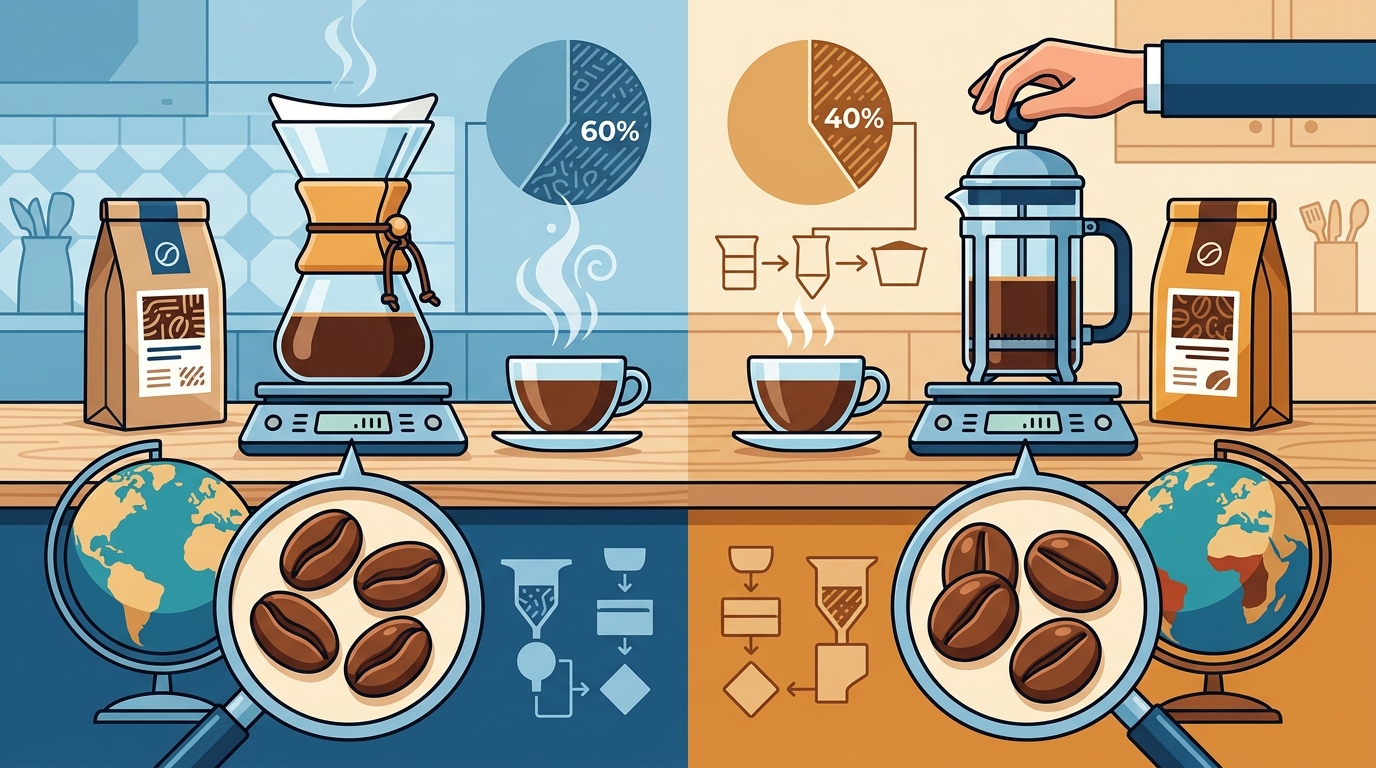
Understanding the fundamental differences between Arabica and Robusta coffee is essential for any serious coffee enthusiast. According to the International Coffee Organization, Arabica accounts for approximately 60% of global coffee production, while Robusta makes up the remaining 40%. This disparity is not random but driven by distinct chemical compositions that dictate flavor, acidity, and caffeine content. By exploring these botanical and processing differences, you can make informed decisions about your daily brew.
Flavor Profiles and Acidity
The most immediate difference between Arabica and Robusta coffee lies in their taste profiles. Arabica beans are widely regarded as the premium choice due to their complex and nuanced flavor notes. These beans typically exhibit higher acidity, which contributes to a bright, fruity, or floral character. This acidity is often described as wine-like, providing a lively mouthfeel that many specialty coffee drinkers prefer.
In contrast, Robusta beans are known for their strong, harsh, and earthy flavors. They lack the delicate acidity found in Arabica, resulting in a heavier body and a more straightforward taste. Robusta often carries notes of rubber, wood, or burnt grain. While some may find these flavors unappealing in isolation, they provide a robust foundation for certain espresso blends.
When you browse our collection of single-origin coffees, you will predominantly find Arabica beans. These are sourced from high-altitude regions where the slower maturation process allows sugars to develop fully. This natural sugar development is critical for achieving the sweet, complex profiles associated with high-quality Arabica.
Caffeine Content and Bitterness
Caffeine acts as a natural pesticide for coffee plants, protecting them from pests and diseases. Robusta plants are hardier and grow at lower altitudes, making them more susceptible to pests. Consequently, Robusta beans contain nearly twice the amount of caffeine as Arabica beans. This higher caffeine content contributes significantly to the bitter taste profile of Robusta.
Arabica beans, grown in more controlled and often higher-altitude environments, have lower caffeine levels. This lower concentration allows the subtle aromatic compounds to shine without being masked by intense bitterness. The result is a smoother, more balanced cup that is easier on the stomach for many consumers.
For those seeking a strong energy boost, Robusta is the superior choice. However, for those prioritizing flavor complexity, Arabica remains the gold standard. You can explore our curated blends to see how roasters balance these two beans for optimal results.
Growing Conditions and Bean Structure
The geographical origin of the coffee bean plays a pivotal role in its final taste. Arabica plants are delicate and require specific climatic conditions to thrive. They grow best at altitudes between 3,000 and 6,000 feet in tropical climates with consistent rainfall and shade. This difficult cultivation process makes Arabica more expensive to produce.
Robusta plants, on the other hand, are resilient and can grow at lower altitudes, typically below 2,000 feet. They are resistant to diseases and can withstand higher temperatures. This hardiness makes Robusta a more cost-effective crop for farmers, which is reflected in its lower market price.
Visually, the beans also differ. Arabica beans are oval-shaped with a curved center line. Robusta beans are smaller, rounder, and have a straighter center line. These structural differences affect how the beans roast and extract during brewing. Understanding these origins helps explain why single-origin coffees often command a premium price.
Blends vs. Single Origin
Many commercial coffee blends combine Arabica and Robusta beans to achieve a specific balance of flavor and crema. Espresso blends, in particular, often include a percentage of Robusta to enhance the crema layer and provide a lasting kick of caffeine. This combination creates a full-bodied shot that holds up well against milk and sugar.
Single-origin coffees, however, are almost exclusively Arabica. These beans are sourced from a specific region, allowing the unique terroir to express itself in the cup. Terroir refers to the complete natural environment in which a particular crop is produced, including factors such as soil, rainfall, and sunlight.
When you order sample packs from Just Coffee, you can experiment with different origins to discover your preferred flavor profile. This approach allows you to appreciate the subtle variations between Arabica beans from Ethiopia, Colombia, and Brazil.
Brewing Methods for Each Type
Different brewing methods highlight different characteristics of Arabica and Robusta beans. For pour-over and drip coffee, Arabica beans are ideal because their acidity and floral notes are accentuated by the clean extraction process. The water temperature and grind size must be carefully controlled to avoid over-extraction, which can lead to bitterness.
Espresso brewing benefits from the higher oil content and crema production of Robusta beans. The pressure of the espresso machine extracts the intense flavors and caffeine quickly, creating a rich and potent shot. Many baristas use a blend of 70% Arabica and 30% Robusta for their signature espresso.
Cold brew methods also work well with both types, but the results vary significantly. Cold brew made from Arabica tends to be smoother and sweeter, while Robusta cold brew is stronger and more bitter. Experimenting with flavored coffees can also help you find a middle ground that suits your palate.
Key Takeaways
- Flavor Complexity: Arabica offers fruity, floral, and acidic notes, while Robusta provides earthy, woody, and bitter flavors.
- Caffeine Levels: Robusta contains nearly double the caffeine of Arabica, contributing to its bitterness and pest resistance.
- Growing Altitude: Arabica grows at higher altitudes (3,000-6,000 feet), while Robusta thrives at lower elevations.
- Bean Structure: Arabica beans are oval with a curved center, whereas Robusta beans are rounder with a straight center line.
- Espresso Use: Robusta is often added to espresso blends to enhance crema and body.
- Market Share: Arabica represents about 60% of global coffee production, dominating the specialty market.
- Pricing: Arabica is generally more expensive due to its delicate growing requirements and higher yield costs.
Frequently Asked Questions
Is Arabica or Robusta better for espresso?
Robusta is often preferred in espresso blends for its ability to produce a thick crema and intense flavor. However, high-quality Arabica espressos are also highly regarded for their complexity and sweetness.
Why does Robusta taste more bitter?
Robusta contains higher levels of caffeine and chlorogenic acids, which contribute to its bitter and astringent taste profile compared to the sweeter Arabica bean.
Can I mix Arabica and Robusta beans?
Yes, many coffee enthusiasts blend the two to balance acidity and body. A common ratio is 80% Arabica to 20% Robusta for a smooth yet strong cup.
Which coffee has more antioxidants?
Robusta beans generally contain higher levels of chlorogenic acid, a powerful antioxidant. However, Arabica also provides significant health benefits with a milder taste.
Is Robusta coffee bad for you?
No, Robusta is not bad for you. It is a natural product with high antioxidant content. The main consideration is its higher caffeine content, which may affect sensitivity.
Where do Arabica beans grow best?
Arabica beans grow best in tropical climates at high altitudes, typically between 3,000 and 6,000 feet, with consistent rainfall and moderate temperatures.
What is the shelf life of roasted coffee?
Roasted coffee is best consumed within two to four weeks of the roast date. After this period, the aromatic compounds begin to degrade, affecting the taste.
Find Your Perfect Coffee
Whether you prefer the bright acidity of Arabica or the bold intensity of Robusta, the right coffee is out there for you. Explore our extensive range of freshly roasted beans and start your journey today. Visit Just Coffee to discover your new favorite blend.