
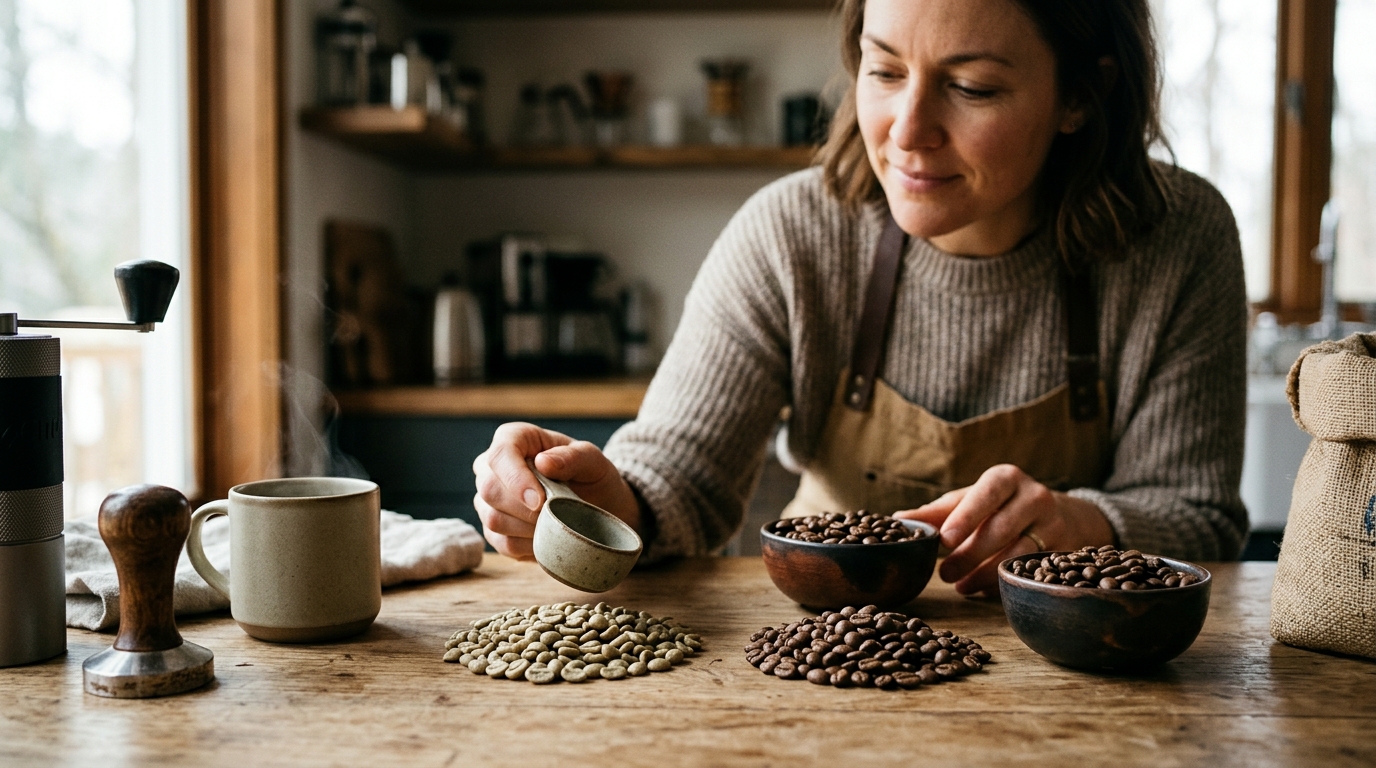
The global coffee industry is dominated by two primary species that dictate the flavor profiles of billions of daily cups. Arabica coffee is a species of Coffea known for its complex acidity, sweet undertones, and lower caffeine content. In contrast, Robusta coffee is a species characterized by its high caffeine levels, intense bitterness, and heavy body. Understanding these distinctions is critical for selecting the right beans for your morning routine. According to the International Coffee Organization, Arabica accounts for approximately 60% of global coffee production, while Robusta makes up the remaining 40%. This split highlights the massive consumer preference for Arabica's nuanced flavor, yet Robusta remains indispensable for espresso blends and instant coffee manufacturing. (Products ndash Just Coffee)
Flavor Profiles and Acidity
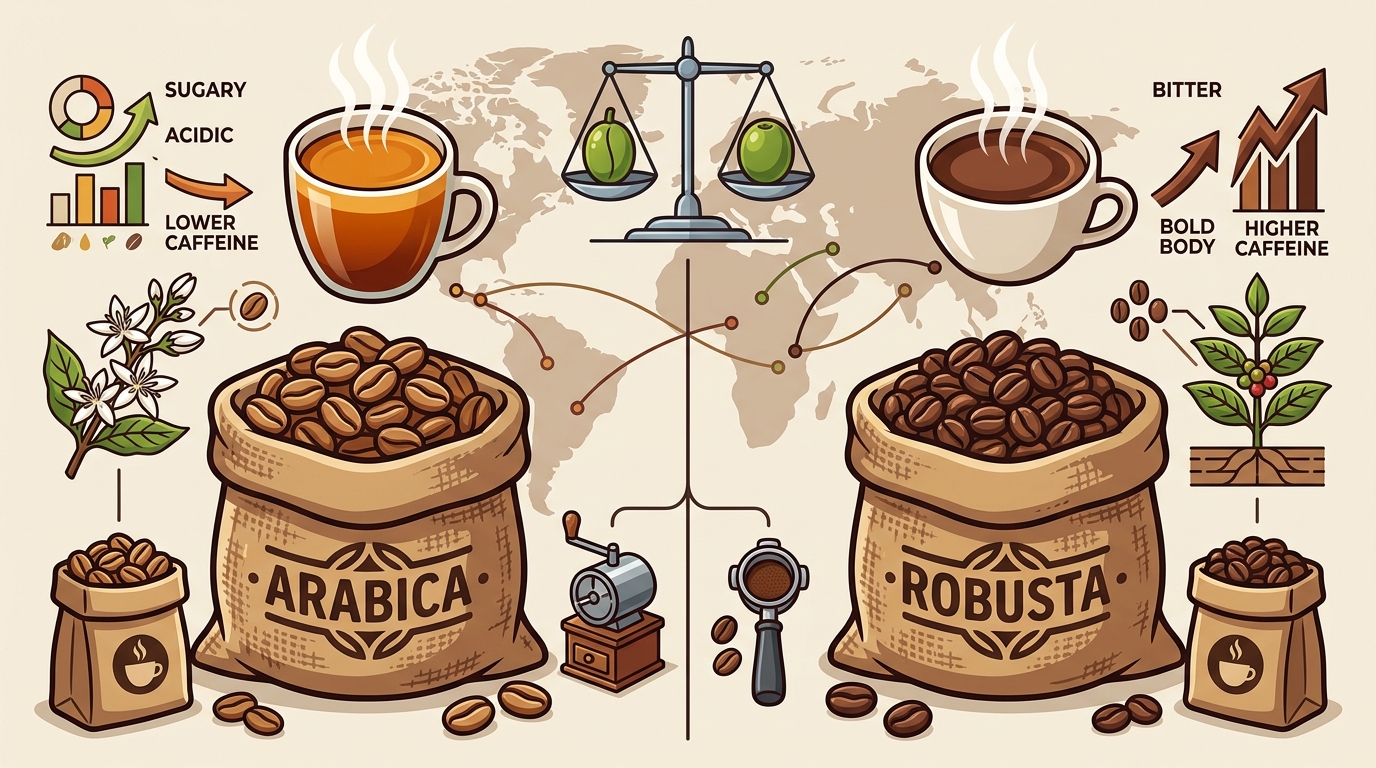
The most immediate difference between these two beans is the taste experience. Arabica beans are widely regarded as the premium choice for specialty coffee enthusiasts. They possess a wider range of flavors, including notes of fruit, sugar, and berries. The acidity in Arabica is often described as bright and crisp, contributing to a clean finish. This complexity arises from the higher concentration of sugars and lipids developed during the slower maturation process of the Arabica cherry. (Blends ndash Just Coffee)
Robusta beans, on the other hand, offer a starkly different profile. They are known for their strong, harsh, and earthy flavors. Many drinkers describe the taste as rubbery or nutty, with a distinct lack of the fruity acidity found in Arabica. The bitterness in Robusta is more pronounced and lingering. This intensity is partly due to the bean's chemical composition, which includes higher levels of chlorogenic acids and trigonelline. These compounds break down during roasting to create a heavier, more robust body that stands up well to milk and sugar.
Caffeine Content and Health
Caffeine acts as a natural pesticide for coffee plants, protecting them from pests and diseases. Robusta plants produce nearly twice as much caffeine as Arabica plants. This chemical defense mechanism allows Robusta to thrive in lower altitudes and harsher climates where Arabica would struggle to survive. The average caffeine content in Robusta beans ranges from 2.2% to 2.7%, while Arabica typically contains between 1.1% and 1.5%.
This significant difference in caffeine levels impacts both the energy boost and the health implications for consumers. Higher caffeine content can provide a more immediate and intense stimulant effect, which is why Robusta is often preferred in energy-focused espresso blends. However, the increased bitterness can be a barrier for those sensitive to harsh flavors. Research published in the Journal of Nutrition suggests that moderate coffee consumption is linked to various health benefits, including reduced risk of type 2 diabetes and liver disease. The choice between Arabica and Robusta often comes down to personal tolerance for bitterness and desired caffeine intensity.
Growing Conditions and Resilience
The geographical origin and cultivation methods of these beans significantly influence their quality and price. Arabica plants are delicate and require specific growing conditions to thrive. They grow best at high altitudes, typically between 600 and 2,000 meters above sea level. They need cool temperatures, consistent rainfall, and shade to protect them from direct sunlight. These stringent requirements make Arabica cultivation more labor-intensive and costly.
Robusta plants are far more resilient and adaptable. They grow well at lower altitudes, from sea level up to 800 meters. They thrive in hotter, more humid climates and are resistant to many pests and diseases that decimate Arabica crops. This hardiness makes Robusta a more reliable crop for farmers in regions like Vietnam and Brazil, which are major global producers. The ease of cultivation contributes to the lower market price of Robusta beans compared to their Arabica counterparts.
Bean Structure and Roasting
Visually, the two bean types are distinct. Arabica beans are oval-shaped with a curved center line. They are generally smaller and denser than Robusta beans. This density contributes to a slower, more even roast, allowing the complex sugars to caramelize properly. The result is a bean that develops a rich, aromatic profile without burning easily.
Robusta beans are rounder and smaller, with a straight center line. They are less dense and roast faster than Arabica. Because of their high sugar content relative to their size, they can burn quickly if not monitored closely. The roasting process for Robusta often aims to bring out its natural nutty and woody notes while mitigating some of the harsher bitterness. Understanding these structural differences helps roasters optimize the flavor extraction for each bean type.
Usage Applications and Blends
The application of these beans varies widely across the coffee industry. Arabica is the standard for single-origin coffees, pour-overs, and drip brewing methods where clarity of flavor is desired. It is the preferred choice for specialty cafes that highlight the unique terroir of their beans. The nuanced flavors of Arabica are best appreciated in black coffee, allowing the drinker to detect subtle notes of chocolate, citrus, or floral hints.
Robusta is frequently used in espresso blends to enhance the crema and provide a stronger kick. The high caffeine and lipid content contribute to a thicker, more persistent crema, which is a hallmark of a well-pulled espresso shot. It is also the primary bean used in instant coffee production due to its strong flavor and lower cost. Many commercial coffee blends mix Arabica and Robusta to balance flavor complexity with body and caffeine strength.
| Feature | Arabica | Robusta |
|---|---|---|
| Flavor Profile | Sweet, fruity, acidic | Bitter, earthy, nutty |
| Caffeine Content | 1.1% - 1.5% | 2.2% - 2.7% |
| Growing Altitude | 600 - 2,000 meters | Sea level - 800 meters |
| Bean Shape | Oval with curved line | Round with straight line |
| Primary Use | Specialty coffee, single-origin | Espresso blends, instant coffee |
Key Takeaways
- Flavor Complexity: Arabica offers superior acidity and sweet, fruity notes, while Robusta provides intense bitterness and a heavy body.
- Caffeine Levels: Robusta contains nearly double the caffeine of Arabica, making it a stronger stimulant.
- Growing Resilience: Robusta is harder to cultivate and grows at lower altitudes, whereas Arabica requires high-altitude, shaded environments.
- Bean Structure: Arabica beans are oval with a curved center line, while Robusta beans are round with a straight center line.
- Market Value: Arabica generally commands a higher price due to its delicate cultivation and complex flavor profile.
- Espresso Performance: Robusta is often added to espresso blends to increase crema thickness and caffeine kick.
- Health Impact: Both beans offer antioxidants, but the higher chlorogenic acid content in Robusta may provide additional health benefits.
Frequently Asked Questions
Is Arabica or Robusta better for espresso?
Many baristas prefer a blend of both. Arabica provides the flavor complexity, while Robusta adds crema and body. Pure Robusta espresso is very strong and bitter, while pure Arabista can lack the necessary punch for some espresso styles.
Why is Robusta cheaper than Arabica?
Robusta is cheaper because it is easier to grow. It is resistant to pests and diseases and thrives in lower altitudes, reducing the labor and risk associated with cultivation compared to delicate Arabica plants.
Does Robusta have more antioxidants?
Yes, Robusta beans contain higher levels of chlorogenic acids, which are powerful antioxidants. This makes Robusta a potentially healthier option for those seeking maximum antioxidant intake from their coffee.
Can I grind Arabica and Robusta together?
Absolutely. Many commercial coffee bags contain a blend of both. Grinding them together allows you to enjoy the best of both worlds, balancing the bright acidity of Arabica with the bold body of Robusta.
Which coffee has less acidity?
Robusta coffee has significantly less acidity than Arabica. If you have a sensitive stomach or prefer a smoother, less sharp taste, Robusta or a low-acid Arabica blend might be a better choice.
Is instant coffee made from Robusta?
Most instant coffee is made from Robusta beans. The strong, bold flavor of Robusta holds up well to the freeze-drying or spray-drying processes used in instant coffee production.
What is the origin of Arabica coffee?
Arabica coffee is believed to have originated in Ethiopia. It was later cultivated in Yemen and spread throughout the world, becoming the most popular coffee species globally.
How do I store freshly roasted coffee?
Store your coffee in an airtight container in a cool, dark place. Avoid refrigeration or freezing unless you are storing it for long-term preservation, as moisture can degrade the flavor. Visit Just Coffee for tips on preserving bean freshness.
Shop Freshly Roasted Coffee
Whether you prefer the bright, complex notes of Arabica or the bold, intense kick of Robusta, the quality of your brew starts with fresh, properly sourced beans. At Just Coffee, we specialize in delivering freshly roasted coffee directly to your door. Our curated selection includes single-origin Arabica beans and robust Robusta blends, ensuring you find the perfect match for your palate. Explore our All Coffees collection to discover new favorites. Take advantage of our free shipping on all U.S. orders and elevate your daily coffee ritual today.