

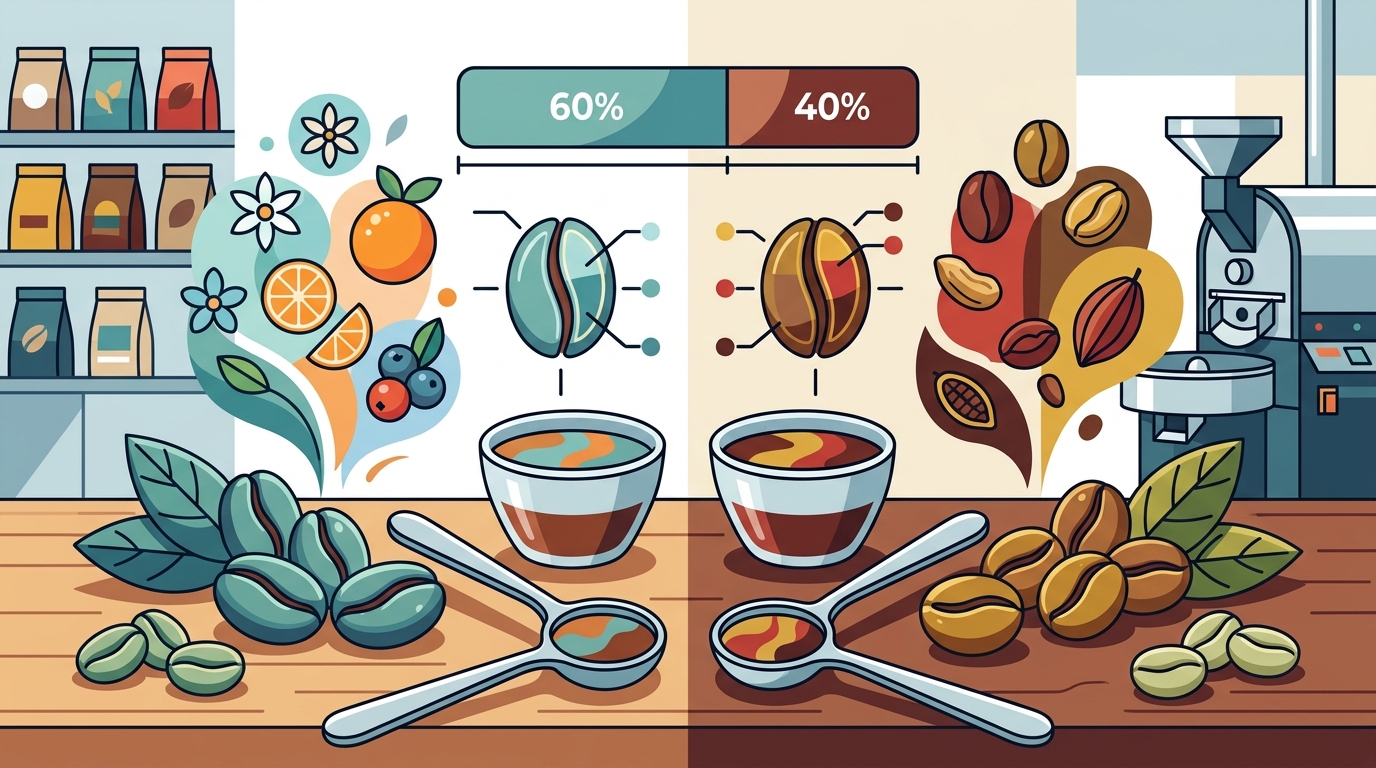
According to the International Coffee Organization, Arabica beans account for approximately sixty percent of worldwide harvests, while Robusta varieties make up the remaining forty percent. This distribution directly shapes how roasters formulate their daily offerings and how consumers experience their morning brew. Understanding these botanical distinctions helps buyers select the exact flavor profile they prefer. The following analysis breaks down the sensory, chemical, and commercial factors that separate these two dominant crop types. Global market dynamics continue to shift as roasters experiment with hybrid ratios to meet evolving consumer expectations.
Understanding the Core Botanical Distinctions
Arabica coffee is a high-altitude botanical species that thrives in tropical climates with consistent rainfall and well-drained soil. This variety requires careful cultivation because it remains highly susceptible to pests and harsh weather conditions. The beans themselves exhibit a curved, elongated shape with a lighter green hue before roasting. Robusta coffee is a hardy agricultural crop that grows at lower elevations and tolerates extreme temperature fluctuations. These plants produce rounder, denser beans that contain significantly higher natural sugar concentrations. The structural differences directly influence how moisture evaporates during the roasting process. Higher sugar content in Robusta beans caramelizes faster, which creates a heavier body and deeper charred notes. Arabica beans roast more slowly, preserving delicate floral and fruity esters that define premium specialty markets. Roasters carefully monitor temperature curves to ensure consistent extraction across every batch.
Flavor Profile Breakdown: Acidity and Body
Acidity represents the bright, sparkling sensation that coats the tongue during the initial sip. Arabica varieties consistently deliver higher acidity levels that mimic citrus, berry, or stone fruit notes. This vibrant acidity creates a clean finish that appeals to modern specialty coffee drinkers. Robusta beans exhibit remarkably low acidity, which results in a flatter, more straightforward flavor curve. The mouthfeel of Robusta coffee is notably thicker and more syrupy than its highland counterpart. This heavier body often carries earthy, woody, or nutty undertones that persist long after swallowing. Consumers seeking a smooth, approachable cup typically gravitate toward single origin collections that highlight these nuanced flavor markers. Roasters carefully balance these contrasting attributes to create consistent daily drinking experiences. The visual appeal of the crema layer also shifts depending on which botanical species dominates the blend.
Caffeine Content and Bitterness Factors
Caffeine acts as a natural pesticide that protects developing seeds from insect damage and fungal infections. Robusta plants produce nearly double the caffeine concentration found in Arabica crops. This elevated chemical compound directly contributes to a pronounced bitter finish that lingers on the palate. The bitterness serves as a functional masking agent that allows roasters to push darker roast profiles without losing structural integrity. Arabica beans contain lower caffeine levels, which translates to a milder, more rounded bitterness. This gentler profile allows subtle tasting notes to emerge during extended brewing sessions. Energy seekers often prefer Robusta blends because the higher stimulant content delivers a sharper, more immediate physiological response. Specialty roasters carefully calibrate extraction times to minimize harsh astringency while preserving the desired kick. The chemical composition also influences how oils migrate to the bean surface during roasting.
Brewing Methods and Roast Level Impacts
Extraction dynamics change dramatically depending on the chosen brewing vessel and grind size. Espresso machines thrive on Robusta beans because the higher oil content and dense structure create a thick, persistent crema layer. This golden foam traps aromatic compounds and enhances the overall drinking experience. Drip brewers and pour-over methods excel with Arabica varieties because the open cellular structure allows water to flow through evenly. Cold brew preparations benefit from extended steeping times that naturally mellow out harsh bitterness. Roast levels further dictate how these chemical compounds release into your cup. Light roasts preserve the original bean characteristics and highlight complex acidity. Medium roasts balance sweetness with body, creating a versatile foundation for daily consumption. Dark roasts emphasize caramelization and smoky depth, often masking origin-specific flavor markers entirely. Baristas adjust grind settings to compensate for density variations between species.
How Blends Balance the Two Varieties
Commercial roasters frequently combine Arabica and Robusta beans to achieve specific functional and sensory targets. This blending strategy creates a hybrid product that leverages the best attributes of both botanical species. The resulting cup delivers enhanced crema production alongside smoother acidity and reduced bitterness. Many breakfast blends utilize this approach to guarantee consistent performance across different brewing equipment. Sample packs allow curious drinkers to test various ratio combinations before committing to a full bag. Flavored coffee options often incorporate Robusta bases because the robust structure holds synthetic and natural flavorings without washing out. This strategic mixing ensures that every batch maintains predictable flavor consistency across global distribution networks. Consumers can explore curated collections that highlight these carefully engineered flavor profiles. The commercial viability of these blends continues to drive innovation in sustainable agriculture.
Key Takeaways
- Arabica beans dominate global markets with approximately sixty percent of total agricultural output.
- Robusta plants produce nearly double the caffeine concentration found in highland varieties.
- Higher acidity levels in Arabica create bright citrus and floral tasting notes.
- Robusta delivers a heavier body with pronounced earthy and woody undertones.
- Espresso machines utilize Robusta oils to generate thick, persistent crema layers.
- Blended coffee products strategically combine both species for balanced flavor profiles.
- Single origin collections preserve distinct regional terroir and cultivation practices.
Arabica vs Robusta Comparison Matrix
| Attribute | Arabica Characteristics | Robusta Characteristics | |
|---|---|---|---|
| Altitude Requirements | High elevation zones between three thousand and six thousand feet | Low elevation zones near sea level to two thousand feet | |
| Acidity Profile | High brightness with complex fruit esters | Low brightness with straightforward earthy notes | Low brightness with straightforward earthy notes |
| Caffeine Concentration | Lower stimulant levels around one point two percent | Higher stimulant levels approaching two point four percent | |
| Roast Tolerance | Delicate structure burns quickly at high temperatures | Dense structure withstands aggressive dark roasting | |
| Best Brewing Application | Pour-over and drip filtration systems | High-pressure espresso extraction methods |
Frequently Asked Questions
Is Arabica coffee actually healthier than Robusta?
Both varieties contain identical antioxidant compounds, but Arabica delivers them with lower caffeine concentrations. This gentler stimulant profile reduces potential jitters while maintaining robust metabolic benefits. Health-conscious consumers often prefer Arabica for its smoother physiological impact.
Why does Robusta coffee taste more bitter?
Robusta plants produce higher chlorogenic acid concentrations as a natural defense mechanism against environmental stress. These compounds break down into bitter phenylindanes during the roasting process. The resulting flavor profile emphasizes earthy depth over delicate fruit notes.
Can I brew Robusta beans using a standard drip machine?
Standard drip machines handle Robusta beans without issue, though the extraction may emphasize heavier body over bright acidity. Adjusting grind size slightly coarser prevents over-extraction and harsh astringency. Many drinkers appreciate the robust mouthfeel in morning routines.
Do blended coffees sacrifice quality for cost savings?
Strategic blending prioritizes functional consistency and flavor balance over pure origin transparency. Roasters carefully calibrate ratios to enhance crema production and reduce batch variability. This approach ensures reliable performance across different brewing equipment.
How does altitude affect the final cup flavor?
Higher elevations force plants to develop denser seeds with slower maturation cycles. This extended growing period concentrates complex sugars and aromatic compounds. Lower elevation crops mature faster, resulting in simpler flavor structures and higher sugar density.
What is the best way to store roasted coffee beans?
Roasted beans require airtight containers that block oxygen, moisture, and direct sunlight. Storing packages in cool, dark pantry locations preserves peak flavor compounds for three to four weeks. Freezing whole beans extends freshness without compromising structural integrity.
Why do espresso drinks often contain Robusta beans?
Robusta oils create thicker crema layers that enhance visual appeal and trap aromatic compounds. The higher caffeine content provides a sharper energy boost for morning routines. Commercial roasters blend these beans to guarantee consistent performance across high-volume locations.
Get Your Fresh Roast
Experience the precise flavor distinctions between highland Arabica and lowland Robusta varieties. Our freshly roasted coffee delivery service ensures every bag arrives at peak aromatic maturity. Browse our complete catalog to discover blends, single origin selections, and curated sample packs. Explore our full coffee collection today and elevate your daily brewing ritual. Free shipping applies to all domestic orders, making premium roasts accessible to every household. Visit our signature blend page to find your perfect ratio. Try our tasting sample packs to compare profiles risk-free. Discover our single origin catalog for terroir-driven selections. Check our flavored coffee line for bold, aromatic options.