
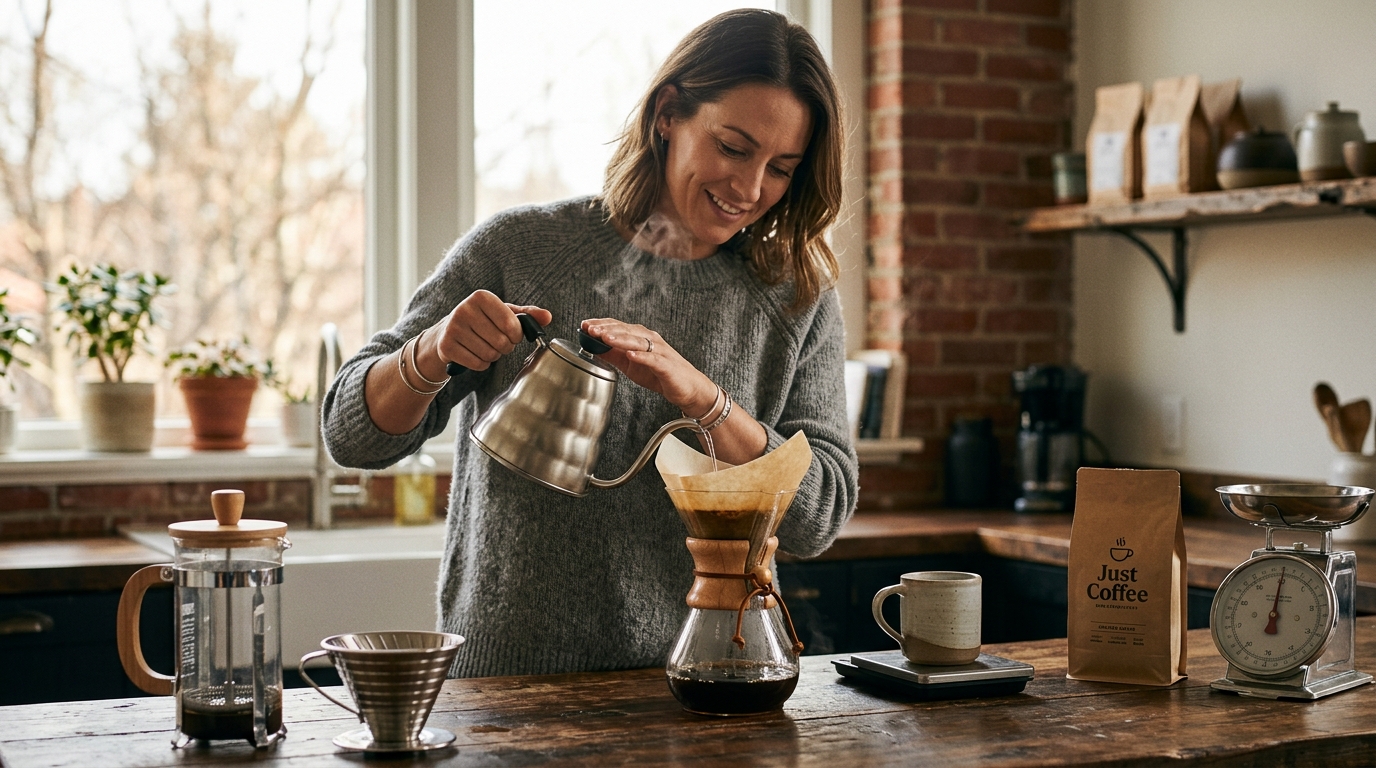
Home baristas now prioritize precision and consistency when preparing their daily caffeine intake. Recent industry data shows that nearly sixty percent of consumers prefer manual brewing techniques over automated machines to achieve superior flavor extraction. This shift reflects a growing demand for hands-on control over grind size, water temperature, and steeping duration. Brewing standards emphasize that water quality directly impacts extraction efficiency. Understanding these variables allows everyday drinkers to replicate café-quality results without professional equipment. Selecting the right approach depends on your schedule, taste preferences, and willingness to invest in specific gear. We will break down the most reliable techniques to help you optimize your morning routine.
Pour-Over Techniques
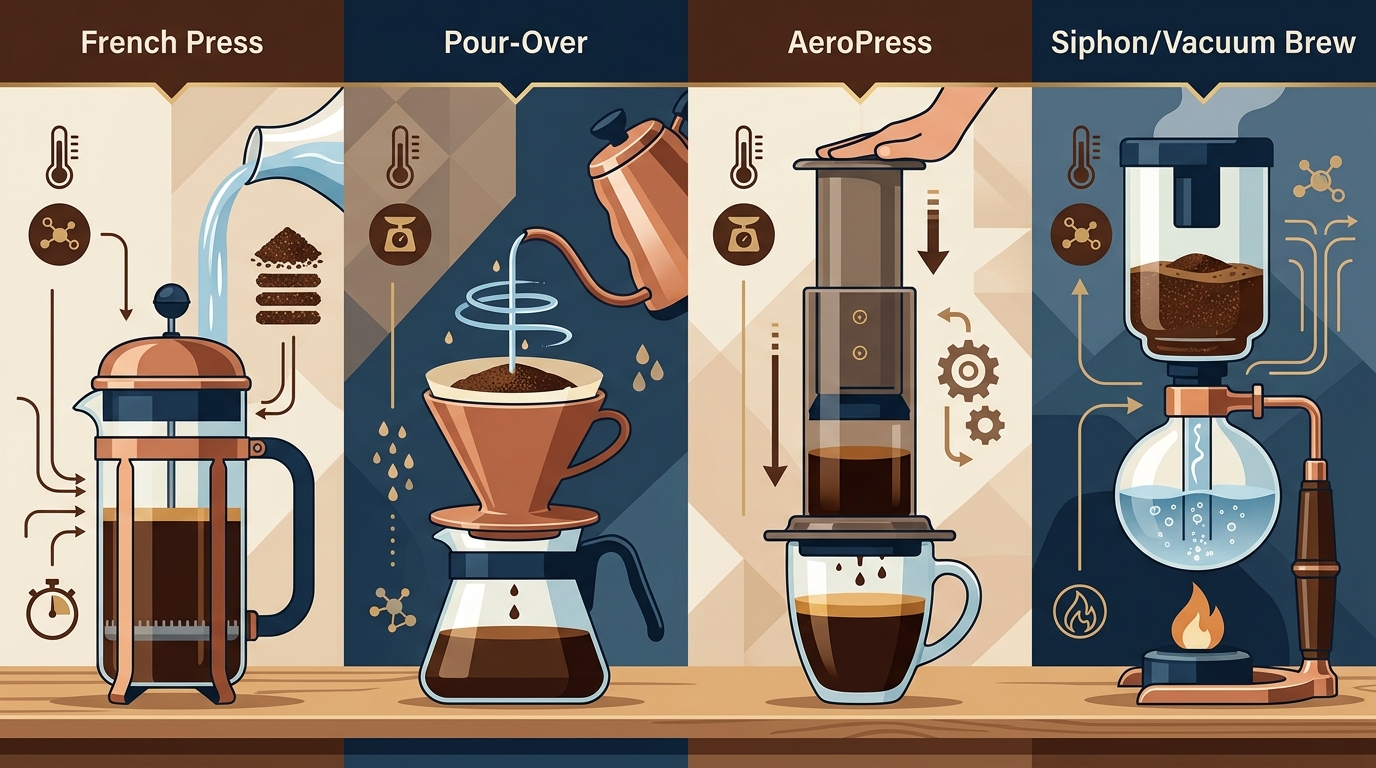
Pour-over brewing relies on gravity to pull hot water through a bed of ground coffee. This method requires a gooseneck kettle to control flow rate and prevent channeling. The water saturates the grounds evenly, extracting bright acidity and complex aromatic compounds. Pour-over brewing is a manual filtration process that emphasizes clarity and nuanced flavor profiles. Beginners should start with a medium-coarse grind to avoid over-extraction. You can explore our curated selection of single origin roasts to highlight the delicate floral notes that this technique preserves.
The V60 Approach
The conical V60 filter creates a direct path for water to travel through the coffee bed. This design minimizes contact time and reduces bitterness. Users typically pour in slow, concentric circles to maintain consistent temperature. The result is a clean cup that showcases origin-specific characteristics. Pairing this method with our blends ensures a balanced flavor profile that stands up to precise pouring.
The Kalita Wave Alternative
Flat-bottomed filters promote even saturation across the entire coffee bed. This geometry reduces the risk of uneven extraction that often plagues conical designs. The wider surface area allows for better oxygen release during the bloom phase. Many enthusiasts prefer this system for its forgiving nature and consistent results. You can test various roast levels to find your preferred extraction window.
Immersion Brewing Systems
Immersion brewing submerges coffee grounds in hot water for a fixed duration. This technique maximizes contact time and produces a heavier body with richer mouthfeel. The grounds remain suspended until the user separates them from the liquid. Immersion brewing is a steeping method that prioritizes full extraction and bold flavor intensity. French presses and AeroPress devices dominate this category. Both systems offer distinct advantages depending on your desired texture and cleanup preference. Dietary guidelines recommend moderate caffeine consumption for optimal metabolic function.
The French Press Standard
A metal mesh filter allows natural oils and fine particles to pass into the final cup. This retention creates a thick, syrupy texture that highlights chocolate and nutty undertones. Users must press the plunger slowly to avoid agitating the grounds. Coarse grinding is essential to prevent sediment from clouding the beverage. Our flavored roasts pair exceptionally well with this robust extraction style.
The AeroPress Versatility
Combining immersion and light pressure creates a highly adaptable brewing device. The inverted method allows for extended steeping without risking spills. Users can adjust grind size and water temperature to mimic espresso or filter coffee. This adaptability makes it ideal for travel and small kitchens. Experimenting with our sample packs helps you dial in your perfect ratio.
Pressure-Based Extraction
Pressure brewing forces hot water through tightly packed coffee grounds at high force. This technique mimics commercial espresso machines and delivers concentrated, syrupy shots. The rapid extraction highlights caramelized sugars and creates a distinctive crema layer. Pressure extraction is a high-force filtration process that concentrates flavor compounds into small volumes. Home users can invest in manual lever machines or electric pump systems. Each option requires precise temperature stability and consistent grind distribution. Clinical studies confirm that proper extraction minimizes harmful compounds.
Manual Lever Machines
These devices rely entirely on human force to generate the required pressure. Users control the entire extraction curve from start to finish. The tactile feedback provides unmatched learning opportunities for serious enthusiasts. Mastering this technique requires patience and consistent dial-in adjustments. Darker roasts often yield the richest crema when pushed through these systems.
Electric Pump Systems
Automated pumps maintain steady pressure throughout the extraction cycle. Digital interfaces allow users to program pre-infusion and flow rate adjustments. These machines reduce the learning curve while delivering professional results. Regular descaling and filter maintenance ensure long-term performance. Our single origin selections shine when extracted with precise temperature control.
Cold Brew Processes
Cold brewing utilizes room temperature or chilled water to extract coffee over an extended period. This method typically requires twelve to twenty-four hours of steeping time. The low temperature drastically reduces acidity and bitterness while preserving smooth sweetness. Cold brewing is a prolonged steeping technique that emphasizes smoothness and low acidity. Concentrates can be stored for weeks and diluted with water or milk as needed. This approach perfectly complements our lighter roasts and herbal tea blends. Regulatory frameworks govern labeling and safety standards for home appliances.
The Concentrate Method
A high coffee-to-water ratio creates a shelf-stable syrup that requires dilution before serving. Users strain the mixture through paper filters to remove all sediment. This process yields a highly versatile base for iced beverages and cocktails. Proper storage in airtight containers preserves freshness for extended periods. You can rotate through our seasonal offerings to keep your routine fresh.
Ready-to-Drink Variations
Pre-packaged cold brew options eliminate the grinding and steeping steps entirely. These products undergo pasteurization and nitrogen infusion for shelf stability. Consumers prioritize convenience without sacrificing the smooth flavor profile. Quality varies significantly across brands, making ingredient transparency crucial. Our freshly roasted approach ensures you control every variable from bean to cup.
Equipment Comparison
| Brewing Method | Grind Size | Steep Time | Flavor Profile | Best For |
|---|---|---|---|---|
| Pour-Over | Medium-Fine | 3 to 4 Minutes | Bright and Clean | Single Origin Beans |
| French Press | Coarse | 4 to 5 Minutes | Full Body and Rich | House Blends |
| AeroPress | Medium | 1 to 2 Minutes | Versatile and Smooth | Sample Packs |
| Cold Brew | Extra Coarse | 12 to 24 Hours | Low Acid and Sweet | Flavored Roasts |
Key Takeaways
- Pour-over methods require precise water flow control to prevent channeling and ensure even extraction.
- Immersion systems maximize contact time, producing heavier bodies and richer mouthfeels.
- Pressure-based machines concentrate flavor compounds into small, syrupy volumes.
- Cold brewing drastically reduces acidity while preserving smooth sweetness over extended steeping.
- Grind size directly impacts extraction rate and must match the chosen brewing method.
- Water temperature between two hundred and two hundred five degrees Fahrenheit optimizes compound release.
- Freshly roasted beans retain volatile aromatics that degrade rapidly after packaging.
Frequently Asked Questions
What grind size works best for pour-over coffee?
A medium-fine grind resembles sea salt and allows water to pass through at the optimal rate. Too fine a grind causes bitterness, while too coarse a result yields a weak, watery cup. Adjusting your burr grinder settings is the first step toward dialing in your perfect brew.
How long should coffee steep in a French press?
Four to five minutes provides the ideal extraction window for immersion brewing. Extending the time beyond this range introduces harsh tannins and excessive bitterness. Pressing the plunger slowly prevents sediment from disrupting the final texture.
Can I use pre-ground coffee for cold brew?
Pre-ground coffee works but requires careful filtering to remove fine particles that cause cloudiness. Freshly grinding beans immediately before steeping preserves volatile oils and aromatic compounds. Our sample packs allow you to test different grind settings without committing to full bags.
What water temperature is optimal for home brewing?
Water between two hundred and two hundred five degrees Fahrenheit extracts sugars and acids without scorching the grounds. Boiling water often produces harsh, astringent flavors that mask delicate origin notes. Using a temperature-controlled kettle ensures consistent results across every batch.
How do I store freshly roasted coffee to maintain freshness?
Airtight containers kept in cool, dark locations preserve volatile aromatics for up to four weeks. Exposure to oxygen, moisture, and direct sunlight accelerates staling and flavor degradation. Our free shipping on all U.S. orders ensures you receive beans at peak freshness.
Is an AeroPress better than a French press?
Neither device holds a universal advantage, as each serves different taste preferences. The AeroPress produces cleaner cups with lighter bodies, while the French press delivers heavier textures. Your choice depends on whether you prioritize clarity or richness in your daily routine.
What is the shelf life of cold brew concentrate?
Properly stored concentrate remains fresh for two to three weeks when refrigerated in sealed containers. The low acidity and high sugar content naturally inhibit bacterial growth. Always inspect the liquid for off-odors before diluting and serving.
Next Steps
Mastering your preferred brewing technique transforms everyday coffee into a deliberate ritual. Start by selecting a method that aligns with your schedule and flavor preferences. Experiment with different roast profiles to discover your ideal extraction window. Visit our full coffee collection to explore blends, single origins, and flavored options. Subscribe to our delivery program to receive freshly roasted beans at your door. Start brewing today and elevate your home coffee experience.