

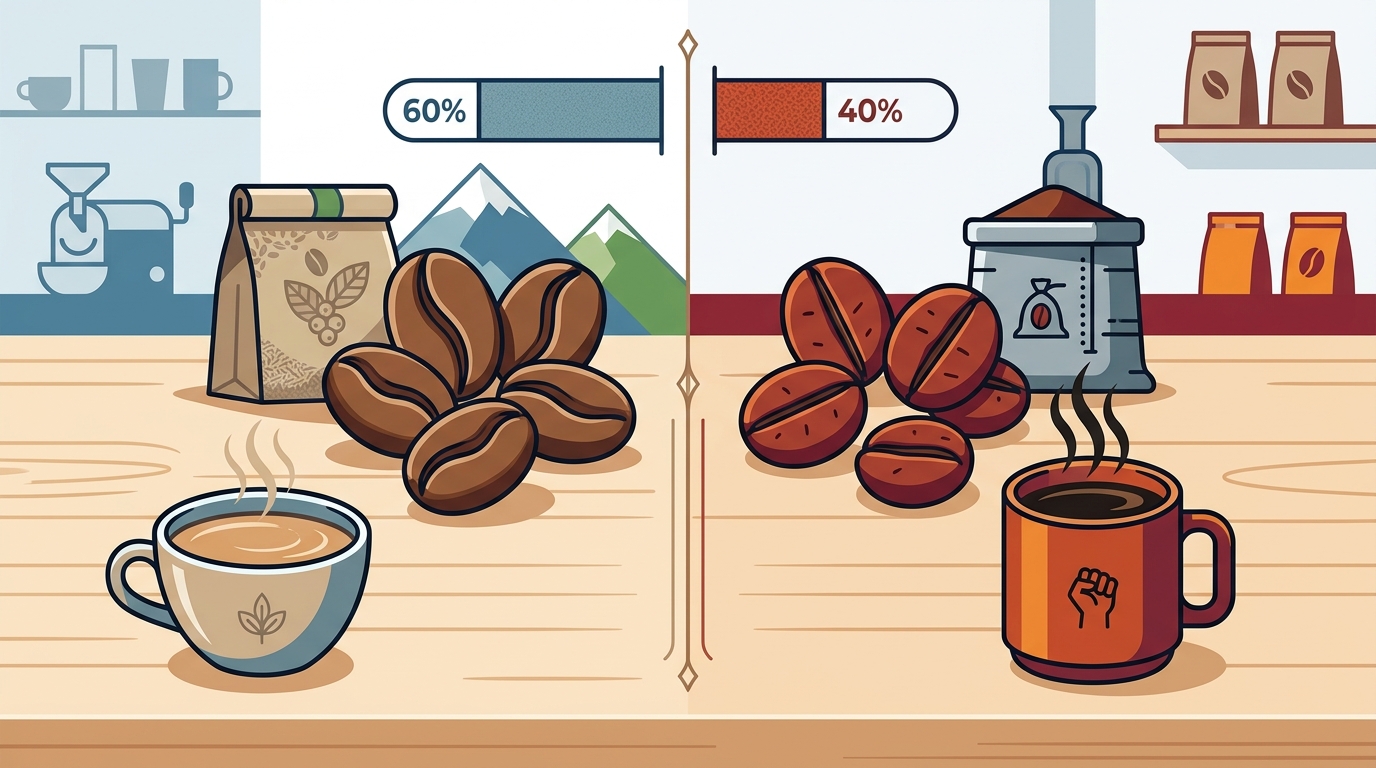
Understanding the fundamental differences between coffee species is essential for selecting the right roast for your daily routine. According to the International Coffee Organization, Arabica beans account for approximately sixty percent of global production, while Robusta makes up the remaining forty percent. This distribution directly impacts your morning cup because each variety develops distinct chemical compounds during cultivation. The choice between these two botanical species ultimately determines your beverage acidity, bitterness, and overall mouthfeel. You can explore our complete collection to find the exact profile that matches your palate.
Botanical Origins and Growing Conditions
Arabica coffee is a botanical species native to the highland regions of Ethiopia. These plants require specific altitude ranges between one thousand two hundred and two thousand meters above sea level. The cooler temperatures and consistent rainfall create ideal growing conditions that slow bean maturation. This extended development period allows complex sugars to form within the seed structure. Robusta coffee is a hardy bean variety that thrives in lower elevations near sea level. These plants resist harsh weather patterns and common agricultural pests without requiring heavy chemical interventions. The structural differences directly influence how each bean absorbs nutrients from the surrounding soil.
Altitude Requirements
Elevation dictates sugar concentration and moisture retention during the drying phase. Higher altitudes force the plant to work harder to produce fruit, which concentrates flavor compounds. Lower elevations accelerate the ripening cycle, resulting in simpler sugar profiles. You can verify these growing parameters by reviewing our single origin collection to see how regional terroir shapes each batch.
Flavor Profile and Acidity Levels
The primary distinction between these varieties lies in their chemical composition and resulting taste. Arabica beans contain nearly twice the concentration of natural oils compared to their robust counterparts. These oils carry complex aromatic compounds that produce fruity, floral, and occasionally chocolatey notes. Robusta beans generate stronger earthy, woody, and rubbery undertones during extraction. The acidity level in Arabica creates a bright, crisp finish that appeals to specialty coffee enthusiasts. Data shows that specialty roasters prioritize Arabica for its nuanced tasting notes and smoother mouthfeel. You can experience these exact flavor variations by sampling our curated blends designed for different palates.
Bitterness and Body
Bitterness originates from chlorogenic acids and trigonelline compounds that break down during roasting. Arabica maintains lower acid concentrations, which reduces perceived bitterness on the tongue. Robusta retains higher acid levels, creating a heavier body and more pronounced astringency. This structural difference explains why espresso machines frequently incorporate Robusta to generate thicker crema. Our flavored collection demonstrates how added botanical extracts can balance natural bitterness while preserving core character.
Caffeine Content and Brewing Behavior
Caffeine content is a chemical compound that functions as a natural pesticide protecting developing seeds from insects. Robusta plants produce nearly double the caffeine concentration found in Arabica seeds. This higher concentration provides stronger pest resistance and faster germination rates in tropical climates. The increased caffeine also translates to a more intense stimulant effect when brewed. According to the National Coffee Association, average daily consumption patterns show consumers prefer higher caffeine options for afternoon productivity. You can adjust your brewing method to extract maximum flavor from either variety by adjusting grind size and water temperature.
Extraction Ratios
Water temperature and contact time drastically alter how each bean releases its compounds. Hotter water extracts bitter compounds faster from Robusta beans, requiring precise timing. Cooler water preserves delicate floral notes in Arabica beans, demanding longer steeping periods. Our sample packs allow you to test multiple brewing methods without committing to full bags. This experimental approach helps you identify your preferred extraction balance.
Market Distribution and Commercial Use
Commercial roasters allocate these varieties based on target demographics and price points. Arabica dominates the specialty market because consumers consistently reward complex flavor profiles. Robusta occupies the instant coffee and budget espresso segments due to its cost efficiency. Global export data indicates that African and South American regions supply the majority of premium Arabica crops. The United States imports millions of pounds of roasted beans annually to satisfy domestic demand. You can support sustainable sourcing by purchasing directly from our transparent supply chain partners.
Pricing and Availability
Supply chain volatility directly impacts retail pricing across both categories. Arabica prices fluctuate based on frost warnings and harvest yields in Brazil and Vietnam. Robusta prices remain relatively stable because the crop withstands economic and environmental stressors. Our all coffees page displays current inventory levels and seasonal availability. Tracking these market shifts helps you plan bulk purchases during favorable pricing windows.
Roasting Techniques and Bean Structure
Roasting transforms raw green seeds into aromatic brown beans through controlled heat application. Arabica beans expand more rapidly during the first crack, requiring careful temperature management. Robusta beans contain denser cellular structures that resist expansion, often requiring longer roast cycles. The Maillard reaction creates hundreds of volatile compounds that define your final cup. According to the Specialty Coffee Association, proper roast profiling preserves origin characteristics while eliminating green bean defects. You can explore our roasting philosophy by browsing our blends, which combine specific bean ratios for balanced flavor.
Dark versus Light Profiles
Light roasts highlight origin-specific acidity and floral aromatics in Arabica beans. Dark roasts emphasize caramelization and bold bitterness in Robusta beans. Medium roasts strike a compromise between origin character and roast-driven sweetness. Our teas and botanical infusions offer alternative caffeine sources for those seeking lower acidity options. Understanding roast levels helps you match your brewing equipment to the ideal bean density.
| Feature | Arabica Characteristics | Robusta Characteristics |
|---|---|---|
| Altitude Range | 1200 to 2200 meters | Sea level to 800 meters |
| Flavor Notes | Fruity, floral, chocolate | Earthy, woody, bitter |
| Caffeine Concentration | 1.1 to 1.5 percent | 2.2 to 2.7 percent |
| Acidity Level | High brightness | Low brightness |
| Primary Use Case | Specialty brewing | Instant and espresso |
Key Takeaways
- Arabica beans contain nearly twice the natural oils of Robusta, creating smoother mouthfeel.
- Robusta plants produce double the caffeine concentration to resist tropical pests.
- Global production splits sixty percent Arabica and forty percent Robusta by volume.
- Altitude requirements directly dictate sugar concentration and final acidity levels.
- Specialty roasters prioritize Arabica for complex tasting notes and bright finishes.
- Robusta remains the industry standard for instant coffee and budget espresso blends.
- Our sample packs allow direct comparison of both varieties before bulk purchasing.
Frequently Asked Questions
Is Arabica coffee actually better than Robusta?
Better depends entirely on your flavor preferences and brewing equipment. Arabica delivers complex acidity and nuanced aromatics that specialty enthusiasts prefer. Robusta provides stronger bitterness and thicker crema that espresso machines require. Neither variety holds absolute superiority across all brewing methods.
Why does Robusta coffee taste more bitter?
Robusta seeds contain higher concentrations of chlorogenic acids and trigonelline compounds. These chemical markers break down into harsher phenols during roasting. The denser cellular structure also traps more bitter compounds until extraction forces them out. This structural difference creates the pronounced astringency you detect on your palate.
Can I mix Arabica and Robusta beans together?
Blending both varieties creates a balanced profile that combines smooth acidity with bold body. Many commercial roasters combine sixty percent Arabica with forty percent Robusta for optimal crema generation. You can explore our pre-mixed blends to experience this exact combination without manual measuring.
Does caffeine content affect how coffee tastes?
Caffeine itself carries a distinctly bitter flavor that intensifies as concentration increases. Higher caffeine levels naturally push the flavor profile toward darker, more robust notes. Lower caffeine concentrations allow delicate floral and fruity compounds to dominate the cup. Your sensitivity to bitterness directly correlates with your preferred caffeine threshold.
Which variety works best for cold brew preparation?
Cold brew extraction favors Arabica beans because extended steeping times amplify delicate acids. Robusta beans can become overly harsh when subjected to twelve hour immersion methods. You can experiment with our single origin selections to find the ideal steeping duration. Adjusting grind size prevents over-extraction while preserving smooth sweetness.
How do I store roasted beans to preserve freshness?
Roasted beans release carbon dioxide and lose volatile aromatics when exposed to oxygen. Storing your supply in an airtight container away from direct sunlight extends peak flavor. Our shipping packaging utilizes one-way valve bags to maintain freshness during transit. You can track your order status to receive your beans at optimal roast maturity.
Final Thoughts and Next Steps
Mastering the distinction between these two botanical species transforms your daily brewing routine. You now understand how altitude, caffeine concentration, and roasting techniques shape your final cup. Our team curates every batch to ensure consistent quality and transparent sourcing. Visit our homepage to browse current inventory and take advantage of free shipping on all United States orders. Start your tasting journey today and discover your perfect flavor match.