
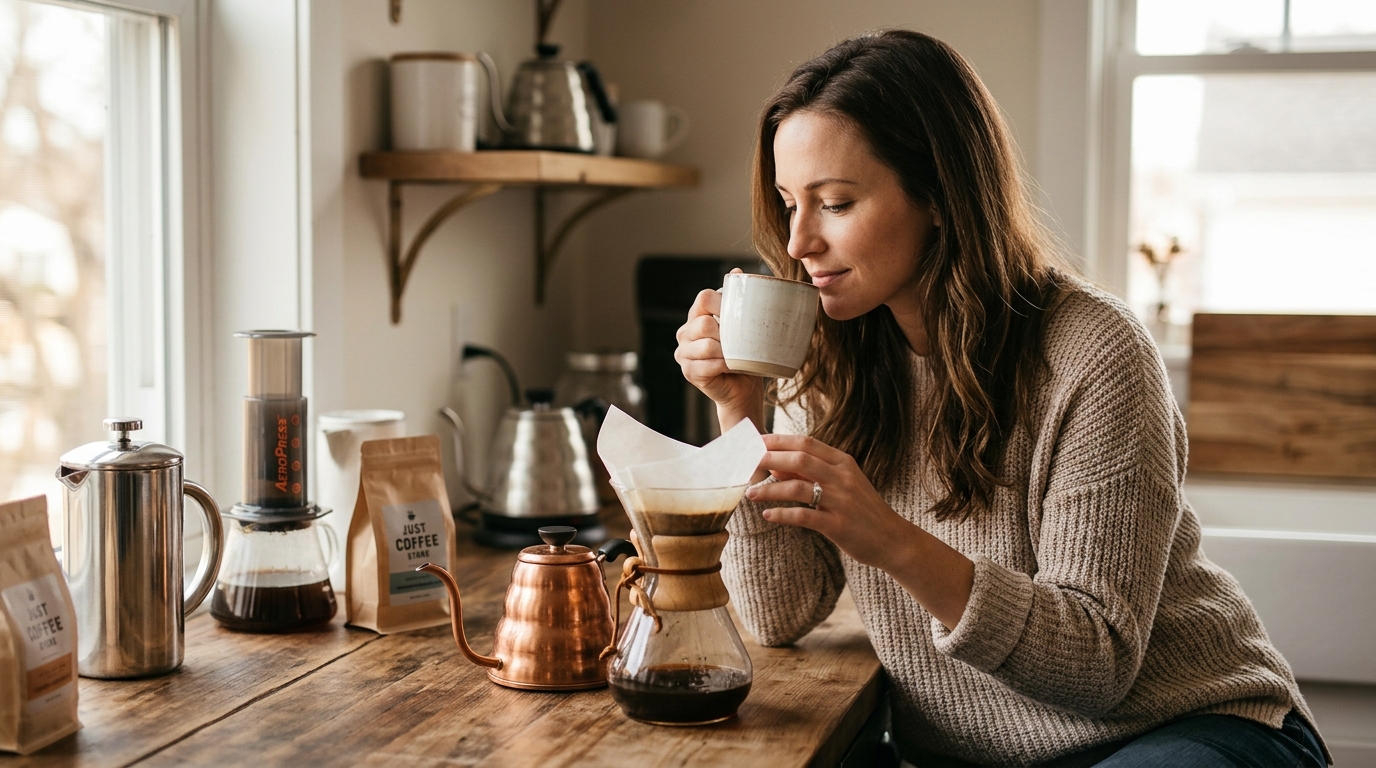
Discovering the ideal way to prepare your morning cup transforms a simple routine into a daily ritual. According to industry research, over sixty percent of modern consumers prefer preparing their beverages manually rather than relying on automated machines. This shift toward hands-on preparation highlights a growing desire for control over flavor extraction and aroma development. When you master the fundamentals of home brewing, you gain the ability to highlight specific tasting notes that mass-produced options consistently overlook. Understanding these core techniques allows you to elevate your daily routine while maximizing the value of every bag you purchase.
Pour Over Methods
Pour over brewing relies on gravity to pull hot water through a bed of ground beans. This technique requires precise control over water temperature and pour speed. Pour over brewing is a manual extraction process that emphasizes clarity and bright acidity. Using a gooseneck kettle ensures consistent flow rates. You can explore various roasts to match your preferred flavor profile by browsing our curated blends. The paper filter traps oils and sediment, delivering a clean cup that highlights delicate floral and citrus notes. Consistency improves rapidly once you establish a steady pouring rhythm.
The V60 Technique
The conical design of the V60 dripper accelerates flow while maximizing surface contact. Beginners often struggle with channeling, which occurs when water finds a single path through the grounds. Maintaining a slow, circular pour prevents uneven extraction. You will notice a noticeable difference in body when switching from flat-bottomed filters to conical designs. Experimenting with grind size remains the most effective way to balance bitterness and sweetness.
The Kalita Wave Approach
Flat-bottomed drippers promote even saturation across the entire coffee bed. The three small drainage holes regulate flow rate without requiring constant agitation. This design forgiving nature makes it highly accessible for first-time manual brewers. Many enthusiasts prefer this method when working with darker roasts that naturally produce heavier body. You can easily find complementary options by visiting our single origin collection. The consistent extraction yields a balanced cup with minimal effort.
Immersion Brewing
Immersion brewing submerges coffee grounds in hot water for a fixed duration. This method eliminates the need for precise pouring mechanics. Immersion brewing is a steeping technique that prioritizes full body and rich mouthfeel. The French press remains the most widely recognized tool for this category. You simply add coarse grounds, pour hot water, and wait four minutes before pressing the plunger. This straightforward process extracts both soluble oils and fine particles, creating a heavier texture. Adjusting your grind to a coarse setting prevents excessive sediment from reaching your cup. You can explore our flavored varieties to discover how subtle additives interact with steeped extraction.
The AeroPress Advantage
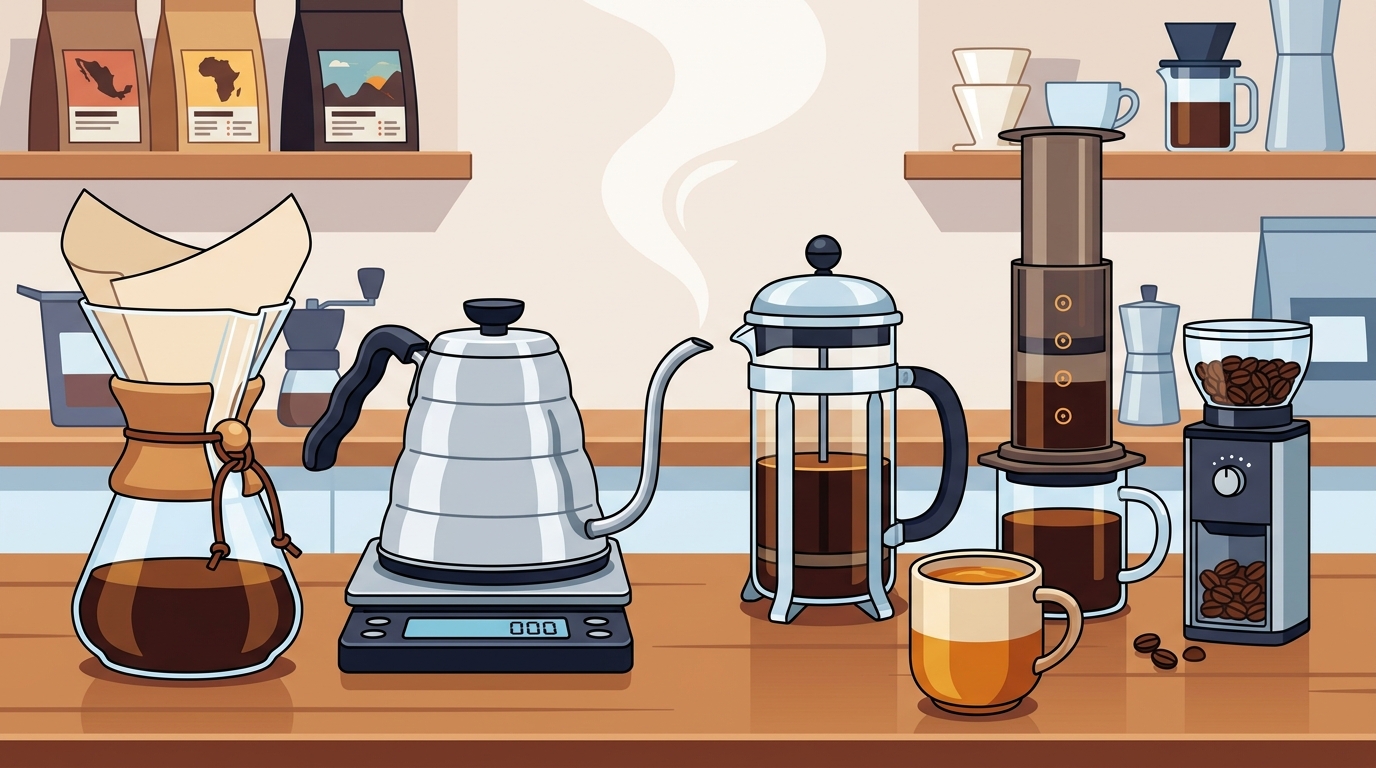
The AeroPress combines immersion and light pressure to produce a remarkably clean cup. Its durable plastic construction makes it ideal for travel or small kitchens. You can invert the device to control steeping time without risking spills. The paper filter removes most oils, resulting in a bright and crisp finish. Many home baristas appreciate the versatility of adjustable grind sizes and brew times. Testing different ratios helps you dial in your perfect strength.
Pressure Based Systems
Pressure brewing forces hot water through tightly packed grounds at high force. This method mimics commercial espresso machines on a smaller scale. Espresso extraction is a high-pressure process that concentrates flavor compounds rapidly. The Moka pot uses steam pressure to push water upward through the coffee bed. It produces a strong, concentrated brew that closely resembles traditional espresso. You will need to monitor heat levels carefully to avoid burning the grounds. Using a medium-fine grind ensures proper resistance and extraction. You can pair this robust style with our sample packs to test multiple profiles without committing to full bags.
Stovetop Maintenance
Regular cleaning prevents stale oils from contaminating future batches. Disassembling the chamber after each use allows you to wash all metal components thoroughly. Never use soap on aluminum surfaces, as it can alter the flavor profile. Drying the parts completely prevents oxidation and extends the lifespan of your equipment. Consistent maintenance guarantees that your brew remains smooth and consistent over time.
Cold Brew Techniques
Cold brewing utilizes room temperature or chilled water to extract flavor over an extended period. This method drastically reduces acidity and bitterness compared to hot water extraction. Cold brew extraction is a prolonged steeping process that emphasizes smoothness and low acidity. You simply combine coarse grounds with water and refrigerate the mixture for twelve to twenty-four hours. The extended contact time pulls out sugars and complex carbohydrates while leaving harsh compounds behind. This makes it highly accessible for sensitive stomachs. You can easily scale your batch size by adjusting the coffee-to-water ratio. Our tea and coffee selections offer versatile options for both hot and cold preparation.
Concentrate Versus Ready-to-Drink
Concentrates require dilution with water or milk before consumption. This format provides maximum flexibility for customizing strength and flavor. Ready-to-drink versions skip the dilution step and deliver immediate refreshment. Both formats preserve the smooth characteristics that make cold brew so popular. Storing your concentrate in airtight containers extends freshness for up to two weeks. Experimenting with different milk alternatives reveals how fats interact with cold extraction.
Bean Selection Guide
Matching your brewing method to the correct roast level maximizes flavor potential. Light roasts preserve origin characteristics and thrive under pour over techniques. Medium roasts offer a balanced profile that works well with immersion methods. Dark roasts deliver bold, smoky notes that complement pressure-based systems. You can navigate our entire inventory by visiting all coffees to compare available options. Understanding how roast levels interact with extraction methods prevents common brewing mistakes. Always store your beans in an opaque, airtight container to preserve freshness.
Grind Size Fundamentals
Grind size directly controls the surface area exposed to water. Fine grounds extract quickly and are ideal for espresso machines. Medium grounds work best for drip brewers and pour over setups. Coarse grounds require longer steeping times and suit French presses. Using a burr grinder ensures uniform particle size and prevents channeling. Adjusting your grind remains the most impactful variable in achieving balance.
| Brewing Method | Grind Size | Brew Time | Best For |
|---|---|---|---|
| Pour Over | Medium-Fine | 3 to 4 Minutes | Clarity and Brightness |
| French Press | Coarse | 4 Minutes | Full Body and Texture |
| AeroPress | Medium | 1 to 2 Minutes | Versatility and Cleanliness |
| Moka Pot | Medium-Fine | 5 Minutes | Strong Concentrated Flavor |
| Cold Brew | Extra Coarse | 12 to 24 Hours | Low Acidity and Smoothness |
Key Takeaways
- Pour over methods require precise water flow control to prevent channeling.
- Immersion brewing extracts oils and sediment for a heavier mouthfeel.
- Pressure systems concentrate flavor compounds through forced hot water.
- Cold brew reduces acidity by extending steeping time to twelve hours.
- Grind size must match your equipment to ensure balanced extraction.
- Roast level dictates which brewing method will highlight optimal notes.
- Proper storage preserves freshness and prevents flavor degradation.
Frequently Asked Questions
How do I choose the right grind size for my equipment?
Match your grind to the contact time between water and coffee. Fine particles suit fast extraction methods like espresso. Coarse particles prevent over-extraction during long steeping processes. Adjusting your grind remains the most effective way to fix bitterness or sourness.
Can I use pre-ground coffee for manual brewing?
Pre-ground coffee works in a pinch but loses freshness rapidly. Pre-ground options expose more surface area to oxygen, accelerating staling. Buying whole beans and grinding immediately preserves volatile aromatics. You can find freshly roasted options by exploring our full catalog.
What water temperature yields the best extraction?
Water between one hundred ninety-five and two hundred degrees Fahrenheit extracts optimal compounds. Boiling water scorches delicate beans and introduces harsh bitterness. Letting your kettle rest for thirty seconds after boiling achieves the ideal range. Consistent temperature control prevents uneven flavor development.
How often should I clean my brewing equipment?
Clean your equipment after every single use to prevent rancid oil buildup. Stale residues drastically alter the flavor profile of fresh batches. Use warm water and a soft brush to remove trapped grounds. Regular maintenance ensures consistent results and extends equipment lifespan.
Is cold brew stronger than hot coffee?
Cold brew concentrates contain higher caffeine levels by volume. Diluting the concentrate with water or milk reduces the final strength. Hot coffee extracts caffeine more efficiently during shorter brew times. Both methods deliver reliable energy without excessive bitterness.
What is the best way to store coffee beans at home?
Store beans in an opaque, airtight container away from direct sunlight. Oxygen, moisture, and heat accelerate the staling process. Freezing beans in small portions preserves freshness for extended periods. Always allow frozen portions to reach room temperature before opening.
How does roast level affect brewing time?
Darker roasts extract faster due to structural changes during roasting. Lighter roasts require longer contact times to unlock complex sugars. Adjusting your brew time compensates for density differences between roasts. Matching roast to method prevents under-extraction or over-extraction.
Start Your Journey
Mastering your preferred brewing method transforms everyday coffee into a crafted experience. You now possess the foundational knowledge to experiment confidently with various techniques. Visit justcoffeestore.com to explore our complete inventory of freshly roasted beans. Free shipping on all United States orders makes it easy to test multiple profiles. Subscribe to receive exclusive updates and priority access to limited releases. Your perfect cup awaits, and the right equipment makes all the difference.