
Global coffee production relies heavily on two primary botanical species, with Arabica accounting for approximately sixty percent of worldwide output according to the International Coffee Organization. This dominant market share directly influences how roasters craft their signature blends and how consumers experience their morning cup. Understanding the botanical divide between these varieties reveals why certain beans deliver smooth, fruity notes while others provide intense, earthy bitterness. Many enthusiasts struggle to identify which profile matches their personal palate. This guide breaks down the essential flavor mechanics, caffeine variations, and brewing recommendations to help you select the perfect roast for your daily routine.
Understanding the Core Botanical Divide
Arabica is a botanical classification describing Coffea arabica seeds that thrive at higher altitudes and require careful cultivation. These plants naturally develop slower growth cycles, which concentrates complex sugars and aromatic compounds within each bean. Robusta is a botanical classification describing Coffea canephora seeds that grow rapidly in warmer, lower elevation environments. This species produces thicker, harder beans that resist pests and disease with remarkable efficiency. The agricultural differences directly dictate the final cup quality and overall drinking experience.
When you explore our single origin collection, you will notice how altitude impacts sugar development. Higher elevation farming forces the plant to work harder, resulting in brighter acidity and nuanced fruit notes. Lower elevation farming prioritizes yield and resilience, which naturally translates to heavier body and deeper earthy tones. Recognizing these agricultural constraints helps you predict how each roast will perform in your kitchen.
Flavor Profile Breakdown: Acidity and Body
Acidity is a sensory measurement describing the bright, crisp sensation that lifts flavors on the tongue. Arabica beans consistently deliver higher acidity levels, creating complex fruit, floral, and citrus undertones. Robusta beans naturally exhibit lower acidity, which produces a heavier, more syrupy mouthfeel. This structural difference explains why some drinkers prefer delicate morning brews while others crave bold afternoon roasts.
Body is a sensory measurement describing the physical weight and texture that coffee leaves on the palate. Arabica varieties typically offer a lighter to medium body that allows subtle tasting notes to shine. Robusta varieties consistently deliver a thick, full body that masks delicate flavors with intense bitterness. You can experience both extremes by browsing our blends collection, where roasters carefully balance these contrasting textures.
Acidity Variations
Higher altitude farming directly correlates with increased organic acid concentration, which creates vibrant citrus and berry notes according to agricultural research. These acids break down during roasting to create vibrant citrus and berry notes. Lower altitude farming preserves fewer acids, resulting in a smoother, more muted flavor profile. This chemical variation remains the primary driver behind consumer preference shifts.
Texture and Mouthfeel
Oil content differs significantly between the two species. Arabica beans contain nearly double the natural oils found in Robusta varieties. These oils carry aromatic compounds that enhance fragrance and smoothness. Robusta beans contain less oil, which creates a drier, more astringent finish. Many specialty roasters leverage this trait when designing flavored coffee options.
Caffeine Content and Bitterness Levels
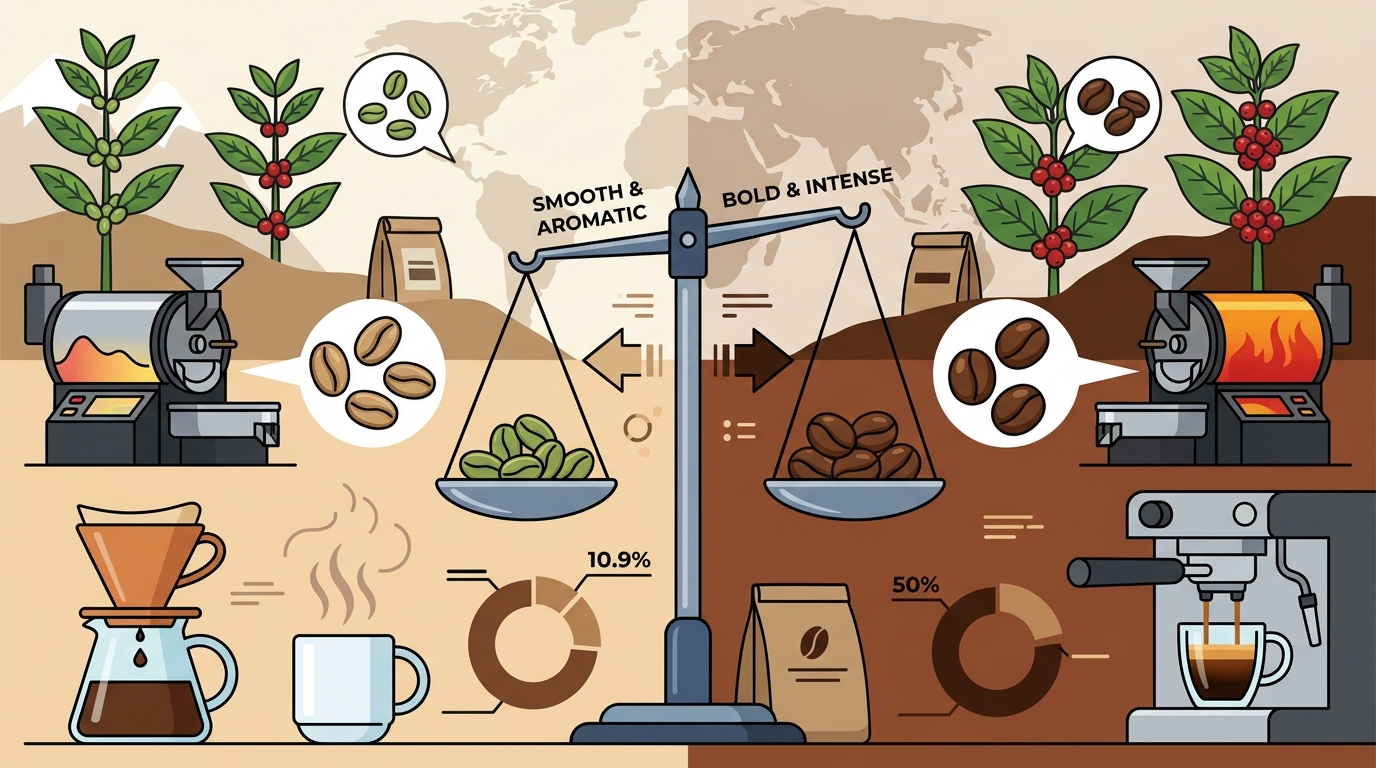
Caffeine is a natural plant defense compound that protects seeds from insect damage and fungal decay. Robusta beans contain nearly double the caffeine concentration found in Arabica varieties. This higher concentration directly amplifies bitterness and creates a harsher aftertaste. Arabica beans prioritize sugar development over defensive compounds, resulting in a milder stimulant effect. The International Coffee Organization reports that global average caffeine content varies significantly by species, with Robusta consistently ranking higher in stimulant density.
Bitterness is a primary taste sensation caused by chlorogenic acids and caffeine interacting with taste receptors. Robusta beans naturally produce higher chlorogenic acid levels during maturation. These compounds break down into quinic and caffeic acids during roasting, intensifying the bitter profile. Arabica beans contain fewer chlorogenic acids, which preserves sweetness and reduces harshness. This chemical distinction explains why espresso blends often incorporate Robusta to create a thicker crema and stronger kick.
Stimulant Density
Higher caffeine concentrations directly impact energy delivery and metabolic response. Robusta varieties deliver a faster, more intense stimulant effect that appeals to heavy coffee drinkers. Arabica varieties provide a smoother, more gradual energy release that suits delicate palates. Understanding this distinction helps you match your daily routine to the appropriate bean type.
Chlorogenic Acid Breakdown
Roasting temperature directly influences chlorogenic acid degradation rates. Lighter roasts preserve more acids, which increases perceived bitterness in Robusta varieties. Darker roasts break down more acids, which softens harshness but introduces charred notes. This thermal transformation remains a critical factor for professional baristas and home brewers alike.
Brewing Methods and Roast Compatibility
Different brewing techniques extract flavor compounds at varying rates, making bean selection crucial for optimal results. Espresso machines require high pressure to force water through tightly packed grounds, which naturally amplifies bitterness in Robusta varieties. Arabica beans respond exceptionally well to drip brewing and pour-over methods, which highlight delicate acidity and floral notes. Cold brew extraction favors Robusta beans because extended steeping times mellow harsh bitterness while preserving heavy body according to extraction studies.
You can experiment with both profiles by ordering our sample packs. These curated selections allow you to test how different roasts perform across multiple brewing devices. French press extraction benefits from Robusta beans because coarse grinding prevents over-extraction of harsh compounds. Pour-over filtration works best with Arabica beans because paper filters trap oils and emphasize clean, bright flavors. Matching your equipment to your preferred bean type eliminates wasted grounds and disappointing cups.
Espresso Extraction Dynamics
High pressure forces water through coffee grounds at extreme speeds, requiring precise bean selection. Robusta beans create thicker crema due to higher gas content and oil concentration. Arabica beans produce thinner crema but deliver superior flavor complexity and sweetness. Professional roasters often combine both species to balance texture and taste.
Cold Brew Optimization
Extended steeping times naturally extract fewer bitter compounds while preserving heavy body characteristics. Robusta varieties excel in cold brew applications because their thick texture remains intact after twelve hours of extraction. Arabica varieties can become overly acidic or thin when subjected to prolonged cold water contact. This extraction behavior dictates which beans perform best for summer beverage preparation.
How to Choose Your Ideal Bean Category
Selecting the right coffee species depends entirely on your personal taste preferences and daily consumption habits. If you prioritize smoothness, complex fruit notes, and lower bitterness, Arabica varieties will consistently satisfy your palate. If you prefer intense energy, thick body, and bold espresso crema, Robusta varieties will deliver the desired impact. Many drinkers successfully navigate both categories by exploring our all coffees collection, which organizes every available roast by flavor profile and brewing recommendation.
Consider your morning routine when making your final decision. Quick drip brewing highlights Arabica acidity and creates a bright, uplifting start to your day. Heavy espresso consumption benefits from Robusta density and delivers a powerful afternoon boost. Reading detailed product descriptions ensures you understand exactly how each bean will perform in your specific kitchen setup.
Key Takeaways
- Arabica accounts for approximately sixty percent of global coffee production and delivers higher acidity with complex fruit notes.
- Robusta contains nearly double the caffeine concentration and produces a thicker, more bitter cup profile.
- Higher altitude farming directly correlates with increased sugar development and brighter flavor characteristics.
- Espresso machines benefit from Robusta density while pour-over methods highlight Arabica clarity.
- Cold brew extraction naturally mingles with Robusta bitterness to create smooth, heavy summer beverages.
- Sample packs provide the safest method to test both species before committing to full bag purchases.
- Roasting temperature directly influences chlorogenic acid breakdown and final bitterness levels.
Frequently Asked Questions
Is Arabica coffee actually healthier than Robusta?
Arabica coffee contains fewer chlorogenic acids and lower caffeine concentrations, which reduces potential stomach irritation for sensitive drinkers. Robusta coffee delivers higher antioxidant levels due to its dense cellular structure and longer maturation cycle. Both varieties offer substantial health benefits when consumed in moderate daily amounts.
Why does Robusta coffee taste so bitter?
Robusta coffee tastes bitter because it naturally produces higher concentrations of chlorogenic acids and caffeine during seed development. These compounds break down into quinic and caffeic acids during the roasting process, amplifying harsh flavor notes. Proper dark roasting can partially mask this bitterness while preserving thick body characteristics.
Can I mix Arabica and Robusta beans together?
You can absolutely mix both species to create custom flavor profiles that balance acidity and bitterness. Many commercial espresso blends combine sixty percent Arabica with forty percent Robusta to achieve optimal crema and bold taste. This hybrid approach allows roasters to control texture while maintaining drinkable sweetness.
Which brewing method highlights Arabica acidity best?
Pour-over brewing highlights Arabica acidity best because paper filters trap heavy oils and emphasize clean, bright flavor compounds. This method allows water to pass through grounds at a controlled rate, preserving delicate fruit and floral notes. French press brewing tends to mute acidity by retaining heavy oils and sediment.
Does caffeine content affect coffee shelf life?
Caffeine content does not directly impact coffee shelf life, but higher density beans like Robusta often retain freshness slightly longer. Arabica beans contain more natural oils, which can oxidize faster and create rancid flavors if stored improperly. Both varieties require airtight containers and cool, dark storage environments to maintain peak flavor.
How do I identify single origin Robusta coffee?
You can identify single origin Robusta coffee by reading detailed product labels that specify exact geographic growing regions. Reputable roasters clearly state altitude, processing method, and harvest year on every packaging label. Our single origin collection provides complete transparency regarding bean sourcing and roasting schedules.
Final Recommendation
Choosing between Arabica and Robusta ultimately depends on your personal taste preferences and daily energy requirements. Arabica varieties deliver smooth, complex flavors that suit delicate palates and bright morning routines. Robusta varieties provide intense energy and thick body that appeal to bold espresso enthusiasts. Explore our complete catalog today to discover how different roasts align with your specific brewing equipment and flavor expectations. Visit justcoffeestore.com to browse our full collection and enjoy free shipping on all United States orders.
| Feature | Arabica Characteristics | Robusta Characteristics |
|---|---|---|
| Acidity Level | High, bright, and complex | Low, smooth, and muted |
| Caffeine Content | Approximately 1.2 percent | Approximately 2.4 percent |
| Body Texture | Light to medium weight | Heavy, syrupy consistency |
| Flavor Notes | Fruit, floral, citrus | Earth, wood, dark chocolate |
| Best Brewing Method | Pour-over, drip, cold brew | Espresso, French press |