
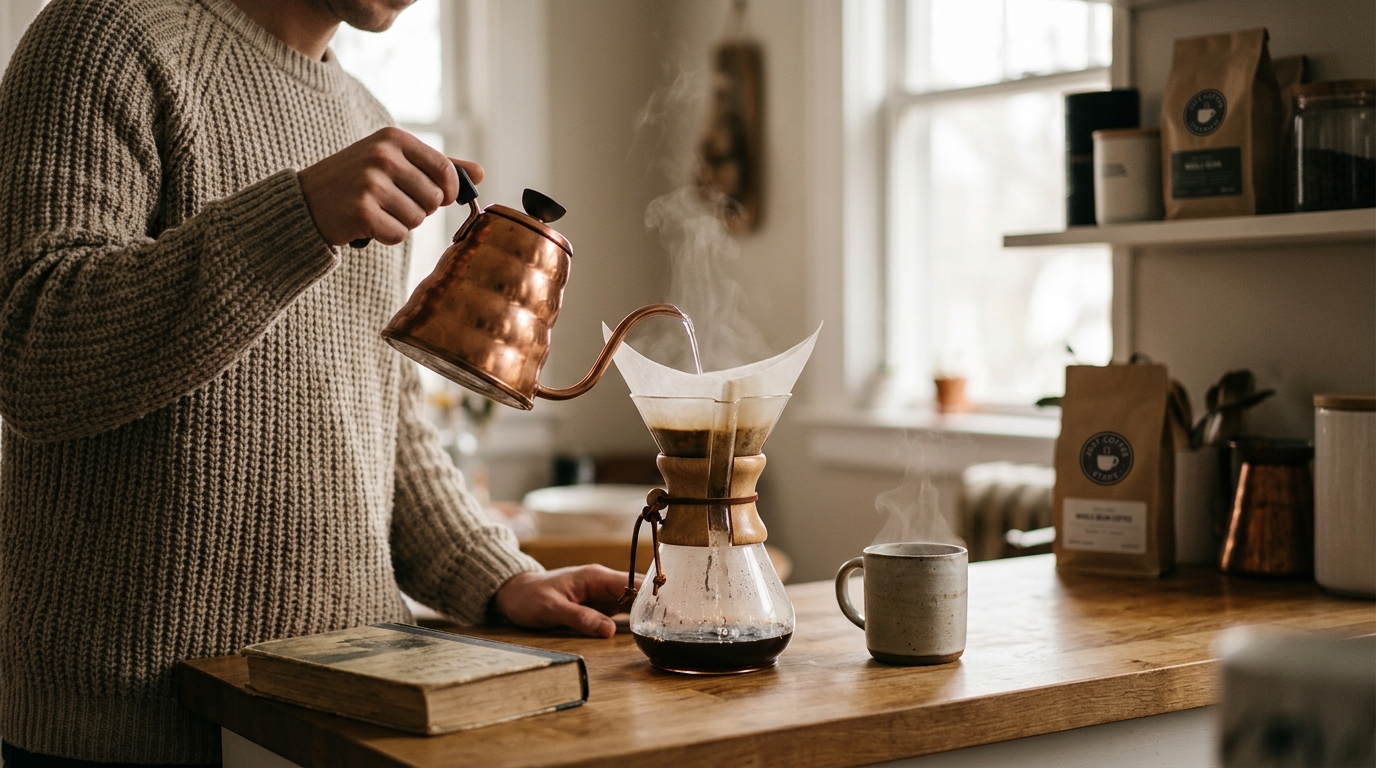
Home brewing has experienced a documented surge in adoption, with recent industry reports indicating that over sixty percent of daily coffee consumers now prepare their morning cup using equipment purchased for residential use. This shift reflects a broader consumer desire for customized flavor profiles and consistent quality without visiting commercial cafes. Understanding the mechanics behind each technique allows you to extract optimal compounds from your beans while avoiding common extraction errors. You will discover how water temperature, grind consistency, and contact time directly influence the final cup. This guide breaks down the most reliable systems for residential kitchens, helping you match your equipment to your preferred taste profile.
Understanding the Core Brewing Variables
Successful home brewing relies on three fundamental variables that dictate extraction quality. Extraction is the process of dissolving soluble compounds from ground coffee into hot water. When water contacts coffee grounds, it pulls out acids, sugars, and bitter alkaloids at different rates. Balancing these rates requires precise control over temperature, agitation, and filtration. Brew ratio is the precise mathematical relationship between coffee grounds and water volume. Most specialty roasters recommend starting with a one-to-sixteen ratio by weight. Adjusting this ratio allows you to intensify or dilify the final cup without changing the beans. Grind size is the particle diameter of roasted beans measured before brewing. Finer particles increase surface area, which accelerates extraction, while coarser particles slow the process. Matching your grind to your equipment prevents under-extraction or over-extraction, which directly impacts bitterness and clarity.
The Pour Over Method for Clean Flavor Profiles
Pour over brewing remains a favorite among enthusiasts who prioritize clarity and nuanced flavor notes. This technique involves manually controlling water flow through a paper or metal filter. The paper filter traps oils and fine sediment, producing a bright, tea-like cup that highlights floral and fruity undertones. You will need a gooseneck kettle to maintain a steady pour rate, which directly influences even saturation across the coffee bed. Most baristas recommend a medium-fine grind that resembles sea salt. Pouring in slow, concentric circles prevents channeling, which occurs when water finds a path of least resistance through the grounds. This method works exceptionally well with light to medium roast profiles, allowing you to explore complex acidity without muddying the finish. You can explore curated options by browsing our Single Origin collection, which features beans specifically roasted to highlight the bright characteristics that pour over brewing excels at revealing.
Mastering the French Press for Full Body
The French press utilizes immersion brewing to create a rich, full-bodied cup with substantial mouthfeel. Unlike filtered methods, this device allows natural oils and fine particles to remain in the final beverage, delivering a heavier texture and deeper flavor concentration. You will need a coarse grind that resembles raw sugar to prevent sediment from passing through the metal mesh filter. Steeping time typically ranges between four and five minutes, after which you press the plunger down slowly to separate the grounds from the liquid. This method is highly forgiving for beginners, yet it demands attention to water temperature, which should hover between two hundred and two hundred five degrees Fahrenheit. Overstepping the grounds introduces excessive bitterness, while understepping leaves the cup tasting sour and thin. The French press pairs beautifully with medium to dark roast blends, which you can discover by visiting our Blends section, where roasters have already balanced the heavy oils for maximum immersion compatibility.
Cold Brew Extraction for Smooth Concentrates
Cold brew extraction relies on extended steeping times and ambient or refrigerated temperatures to draw out soluble compounds. This process requires significantly longer contact time, typically ranging from twelve to twenty-four hours, to achieve proper dissolution. Because cold water extracts fewer acidic compounds and bitter alkaloids, the resulting concentrate tastes remarkably smooth and naturally sweet. You will need a coarse grind and a large vessel that allows the grounds to remain fully submerged throughout the steeping period. Straining the concentrate through a fine mesh filter removes sediment, producing a shelf-stable liquid that can be diluted with water or milk. This method is particularly popular during warmer months, as industry data shows cold brew sales have grown by nearly forty percent over the last five years. You can experiment with various profiles by trying our Sample Packs, which allow you to test how different roast levels perform under extended cold water immersion.
Espresso and Moka Pot Techniques for Intensity
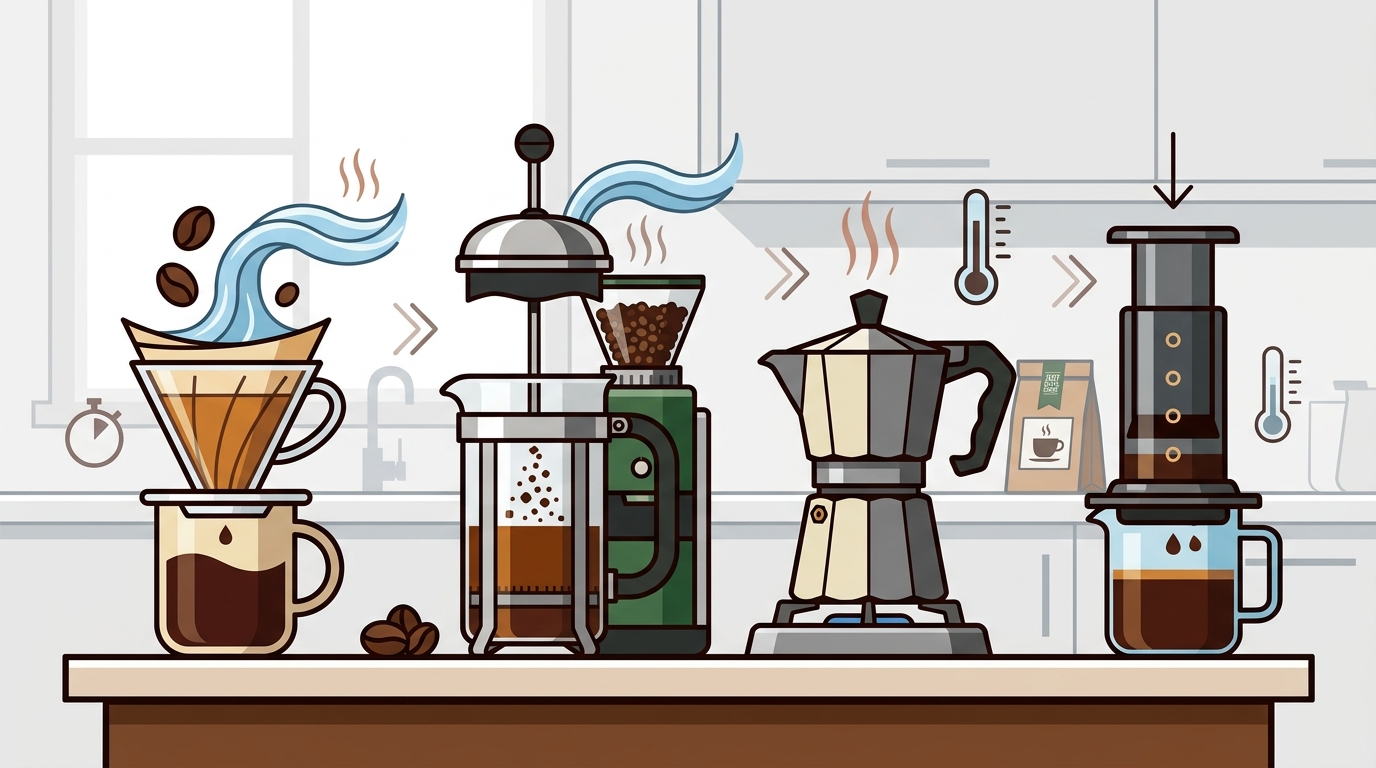
Pressure-based brewing methods generate intense, concentrated shots that serve as the foundation for many milk-based beverages. Espresso machines force hot water through finely ground coffee at nine bars of pressure, creating a viscous liquid topped with creamy emulsified oils called crema. Moka pots utilize steam pressure to push water through a coffee basket, producing a strong, robust cup that closely mimics espresso without requiring expensive equipment. Both methods demand a fine grind and precise dosing to avoid channeling or excessive bitterness. Temperature stability is critical, as fluctuations directly impact extraction consistency. These techniques work best with dark to medium-dark roasts, which you can explore by browsing our Flavored collection, where subtle additions complement the bold intensity of pressure brewing.
Selecting the Right Beans for Your Method
Matching your brewing equipment to the correct roast profile and bean origin maximizes flavor potential. Light roasts preserve origin characteristics, making them ideal for pour over and cold brew methods that highlight acidity and floral notes. Medium roasts offer a balanced profile, bridging the gap between clarity and body, which suits French press and drip systems. Dark roasts emphasize bittersweet compounds and heavy oils, making them the preferred choice for espresso and Moka pot brewing. You should always store your beans in an airtight container away from direct sunlight and moisture to preserve freshness. Grinding your beans immediately before brewing prevents oxidation, which rapidly degrades aromatic compounds. Exploring our All Coffees catalog allows you to compare roast levels, origin regions, and flavor notes side by side. This systematic approach ensures you never waste premium beans on incompatible equipment.
Key Takeaways
- Pour over brewing requires a medium-fine grind and precise water flow to highlight bright, complex acidity.
- French press immersion brewing delivers full body and heavy mouthfeel by retaining natural oils and fine sediment.
- Cold brew extraction utilizes extended steeping times to produce smooth, low-acid concentrates suitable for shelf storage.
- Pressure-based methods like espresso and Moka pots demand fine grinds and precise temperature control for intense results.
- Bean roast level directly correlates with equipment compatibility, with light roasts favoring filtered methods and dark roasts excelling under pressure.
- Grinding immediately before brewing prevents rapid oxidation and preserves volatile aromatic compounds.
- Storing beans in airtight, opaque containers maintains freshness and prevents moisture absorption.
Frequently Asked Questions
What water temperature is optimal for home brewing?
Most specialty coffee guidelines recommend maintaining water between two hundred and two hundred five degrees Fahrenheit. This range ensures proper dissolution of sugars and acids without scorching the grounds. Using a temperature-controlled kettle eliminates guesswork and improves consistency across batches.
How do I prevent bitterness in my coffee?
Bitterness typically results from over-extraction, which occurs when water contacts grounds for too long or at too high a temperature. Adjusting your grind size to be slightly coarser, reducing steep time, or lowering water temperature resolves most bitterness issues. Always measure your coffee by weight rather than volume for precise dosing.
Can I use pre-ground coffee for home brewing?
Pre-ground coffee accelerates oxidation, which rapidly degrades flavor compounds and aromatic oils. Freshly grinding beans immediately before brewing preserves volatile compounds and delivers superior taste. If you must use pre-ground options, store the package in an airtight container and use it within two weeks of opening.
What is the ideal coffee to water ratio?
Specialty coffee standards typically recommend a one-to-sixteen ratio by weight. This means using sixteen grams of water for every one gram of coffee grounds. Adjusting this ratio allows you to intensify or dilify the final cup without changing the beans or equipment.
How often should I clean my brewing equipment?
Residual oils accumulate quickly and turn rancid, which directly impacts flavor clarity. You should disassemble and wash all removable parts with warm, soapy water after every use. Deep cleaning your machine with a specialized coffee cleaner once monthly prevents mineral buildup and maintains consistent extraction.
Is cold brew stronger than hot brewed coffee?
Cold brew concentrates typically contain higher caffeine levels due to extended steeping times and higher bean-to-water ratios. However, the final diluted beverage often tastes smoother and less acidic than hot brewed alternatives. You can adjust the strength by modifying your dilution ratio to match your personal preference.
What filter type produces the cleanest cup?
Paper filters trap the majority of oils and fine sediment, producing a bright, tea-like cup that highlights delicate flavor notes. Metal mesh filters allow more oils to pass through, resulting in a heavier body and richer mouthfeel. Your choice depends on whether you prioritize clarity or texture in your final beverage.
Ready to Brew?
Mastering at-home coffee brewing requires patience, precise measurements, and the right equipment. You now have the foundational knowledge to experiment with pour over, French press, cold brew, and pressure-based methods. Selecting high-quality beans and matching them to your preferred technique will elevate your daily routine. Visit justcoffeestore.com today to explore our complete catalog, take advantage of free shipping on all U.S. orders, and start crafting your perfect cup.